The Most Common Dental Issues We See During Senior House Call Visits
What Families Don't Realize Until a Dentist Actually Shows Up
Most families assume their aging parent's dental health is holding steady. There are no obvious complaints, no dramatic moments, no one saying "my tooth hurts." So life moves forward, visits get harder to arrange, and dental care quietly falls off the list of priorities.
It feels like a manageable gap. But it usually isn't.
When Dr. Banner and his team at In Motion Dentists arrive for a house call in Los Angeles, Orange, or San Diego County, what they find is often very different from what the family expected. Not because anyone was careless, but because dental decline in seniors rarely announces itself clearly. It builds quietly in ways that are easy to miss until someone with a clinical eye is actually in the room.
The issues that tend to get overlooked are gum disease, root decay, medication-related dry mouth, ill-fitting dentures, and pain the patient has been quietly tolerating. These aren't unusual cases. They're what Dr. Banner and his team see regularly on first visits. The rest of this article walks through each one, including why they develop, what the warning signs look like, and what you can do once you know what to look for. If you've been searching for a dentist who comes to your home for elderly patients, this comes from exactly that experience.
Quick Takeaways for Caregivers
- Watch for subtle eating changes. Avoiding certain foods or chewing on one side often signals dental problems before pain ever appears.
- Have their medication list ready. When you call In Motion Dentists at (626) 594-0374, the team will ask about current medications. Many common prescriptions cause dry mouth that quietly accelerates tooth decay.
- Plan for more findings than you expect. On first visits, Dr. Banner's team regularly uncovers issues that have been building for months or years without any obvious signs.
- A full evaluation happens right at home. House call visits include X-rays, cleanings, and many treatments delivered wherever your loved one is most comfortable, no office trip needed.
Advanced Gum Disease That's Been Quietly Progressing for Years
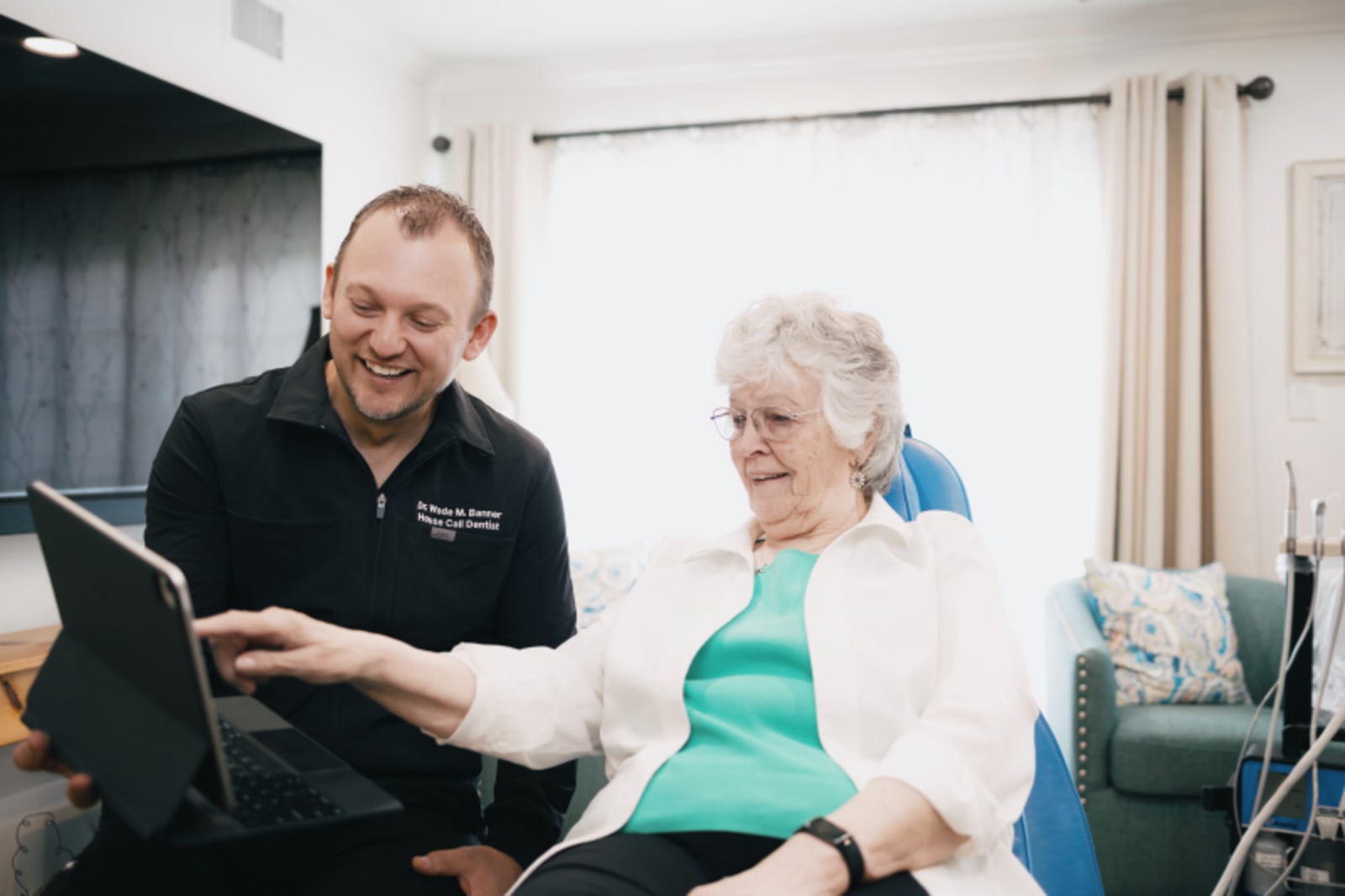
The most common finding on a house call visit is gum disease that has been building for a long time without anyone fully realizing it. It's a disease that's genuinely sneaky in how it develops.
When getting to a dental office becomes difficult or impossible, cleanings get skipped. What starts as missing one appointment becomes missing several years of care. During that time:
- Plaque hardens into tartar that can't be brushed away
- Gum tissue becomes chronically inflamed and starts pulling away from teeth
- The bone supporting the teeth begins to quietly recede
- Pockets form where bacteria can hide and multiply
Because periodontal disease rarely causes sharp, obvious pain in its early stages, families often miss the warning signs. Bleeding gums during brushing gets normalized as "sensitive gums" or "that's just how they've always been." By the time our team arrives for a house call visit across Los Angeles, Orange, or San Diego County, they're often looking at disease that has advanced well beyond what a routine cleaning can address.
What Families Should Watch For
These warning signs often get dismissed as normal aging, but they're actually early indicators of gum disease:
- Pink or red on the toothbrush after brushing
- Gums that look redder or more swollen than usual
- Bad breath that doesn't go away after brushing
- Teeth that look longer because gums are pulling back
- Loose teeth or changes in how dentures fit
Why This Matters Beyond Just Teeth
For aging patients who are already managing complex medical conditions, chronic gum disease creates additional health risks:
- Increased risk of heart disease and stroke
- Difficulty managing blood sugar in diabetic patients
- Aspiration pneumonia from inhaling oral bacteria into the lungs
- Worsening of existing inflammatory conditions
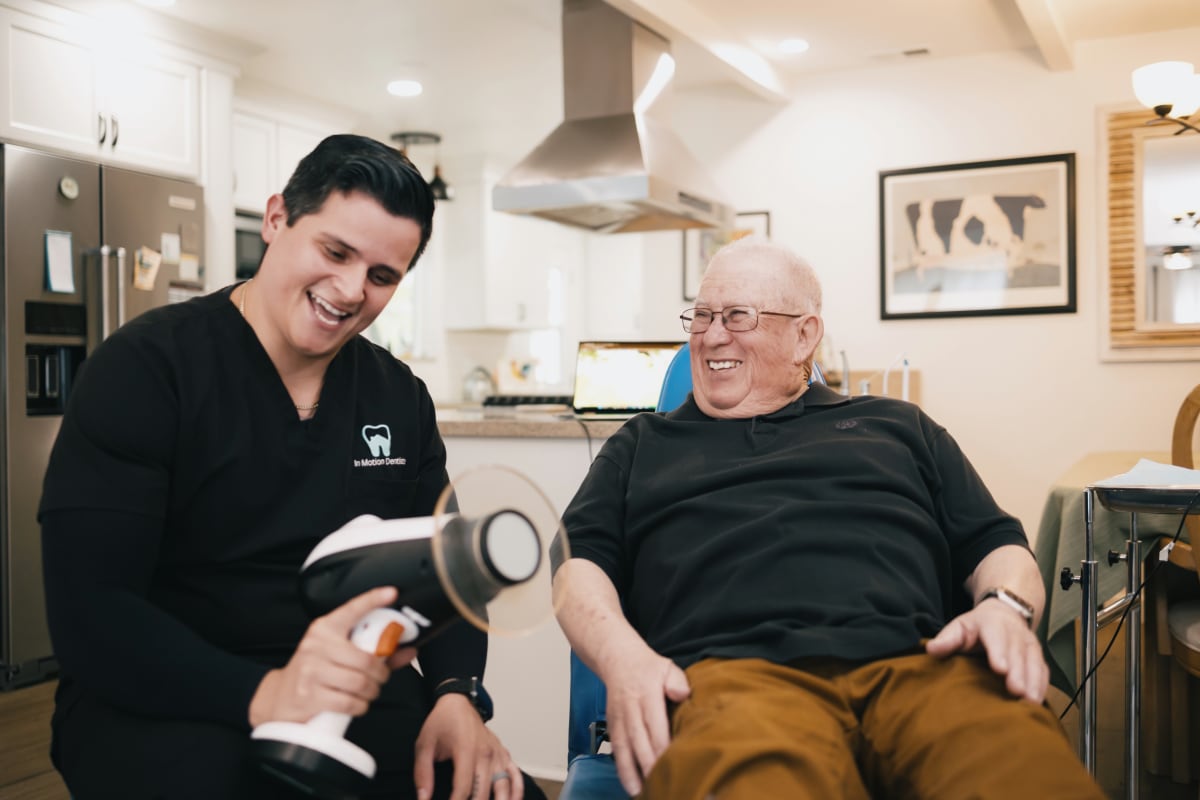
The In Motion Dentists team brings professional portable dental equipment, including the Aseptico Go Ultra system, directly to your loved one's home to assess the full extent of what's happening and create a realistic plan to get things under control. Periodontal disease is manageable when it's identified and addressed consistently. To learn more about what these visits involve, explore in-home teeth cleaning services or the team's approach to senior dental care.
Root Decay: The Cavity Pattern That's Almost Unique to Older Adults
Most families don't realize there's a type of cavity that's almost exclusive to older adults. Root decay forms at the gumline, not on the chewing surface like the cavities most people know about. And it moves fast, much faster than families expect.
When gums recede with age, they expose the root surface of the tooth. Unlike the crown of the tooth, this root surface has no protective enamel. Decay can take hold in weeks or months instead of years. Families are often shocked to learn that a tooth that looked fine during a previous visit needed to be extracted just a few months later.
Why Your Parent Is at Risk
Our team sees the same risk factors creating perfect conditions for root decay on house calls across Los Angeles, Orange, and San Diego Counties:
- Natural gum recession that happens to almost everyone as they age, exposing vulnerable root surfaces
- Medication-related dry mouth from blood pressure medications, antidepressants, and sleep aids that reduce protective saliva
- Harder-to-reach areas when arthritis, tremors, or cognitive changes make thorough brushing near the gumline genuinely difficult
When these factors combine, root decay doesn't just happen. It accelerates. What starts as a small dark spot can destroy a tooth in months, not years.
Why Families Often Miss It
Root decay is genuinely hard to catch without a clinical eye. Families miss it because:
- It starts as dark staining that looks harmless
- Many seniors don't feel pain until the decay is advanced
- It develops in hard-to-see areas near the gumline
- Sudden sensitivity to cold drinks or sweet foods gets dismissed as "getting older"
When our team catches root decay early during a house call visit, a tooth-colored filling can often be placed right in your parent's home. Wait too long, and the tooth often can't be saved. That's why consistent senior dental care visits matter so much. The goal is always to catch problems while they're still fixable.
Dry Mouth Isn't Just Uncomfortable, It's Destroying Their Teeth
Most families don't realize that the medications keeping their loved one healthy might be quietly undermining their teeth. Saliva does something most people never think about until it's gone: it protects teeth around the clock, neutralizing acids and helping repair tiny weak spots before they become cavities. When medications reduce saliva production, that protection disappears, and decay can move through a tooth much faster than anyone expects.
The Medications That Cause the Most Problems
The team pays close attention to medication lists on every visit, because so many common prescriptions cause dry mouth:
- Blood pressure medications (often multiple types)
- Antidepressants and anxiety medications
- Antihistamines and allergy medications
- Diuretics (water pills)
- Sleep aids and pain medications
When someone is managing diabetes, heart disease, arthritis, and depression, they might be taking several of these at once. The goal isn't to question their medical care. It's to understand the full picture so the care plan actually fits the patient's real situation.
What Our Dentists Look for During House Calls
Reviewing medications is always part of the evaluation. Our dentists are looking for patterns that help explain what they're seeing clinically:
- Rapid decay in someone who used to have healthy teeth
- Multiple cavities appearing near the gumline
- Teeth that feel rough or chalky to the touch
- Complaints about food tasting different or metallic
Understanding the medication picture helps create a realistic care plan. Someone with severe medication-related dry mouth needs more frequent cleanings, different preventive products, and closer monitoring than someone with normal saliva flow.
Ill-Fitting Dentures: A Problem Hiding Behind a Smile
Something our team hears often, once families start opening up, is a version of the same quiet confession: "I just thought she wasn't hungry anymore." Or, "He stopped eating steak years ago, but I figured that was just getting older." What families don't realize is that a poorly fitting denture can completely reshape how a person eats, what they're willing to eat, and how much discomfort they silently absorb every single day.
Why Dentures Stop Fitting Over Time
One thing most people aren't told when dentures are first made is that the jawbone doesn't stay the same after tooth loss. It gradually resorbs over time, which means a denture that fit beautifully ten years ago may now be rocking, slipping, and creating sore spots with every bite. This isn't anyone's fault. It's biology.
For many seniors across Los Angeles County, Orange County, and San Diego County who stopped making it into a dental office years ago, that reassessment never happened. Families often miss the warning signs because their loved one adapted quietly:
- Moving toward softer foods and avoiding anything chewy or crunchy
- Starting to leave things on their plate
- Never mentioning discomfort because it became their new normal
- Dentures sitting on the nightstand more often than in their mouth
- Complaining that food "doesn't taste the same" anymore
What the Team Looks For During Home Visits
During a denture evaluation at your loved one's home, our dentists use portable dental equipment to check:
- Pressure sores or red spots on the gums
- Bone loss patterns that affect how the denture sits
- Whether the denture is actually sitting against the tissue properly
- If the bite relationship still makes sense
- How much the denture moves when chewing or speaking
Sometimes a reline, which essentially refits the existing denture to the current shape of the gums, is enough to restore comfort and stability. Other times, the denture has reached the end of its useful life and a new one makes more sense. The team is straightforward about which path makes sense for your loved one's situation, and those conversations happen right at the kitchen table, in a comfortable chair, or wherever your loved one feels most at ease.
A properly fitting denture can make an enormous difference in someone's daily comfort, nutrition, and quality of life. If you're noticing any of the warning signs above, it's worth having someone take a look. In Motion Dentists serves seniors across Los Angeles County, Orange County, and San Diego County, and the team comes directly to your loved one.
Pain That's Going Unreported and Why That Happens
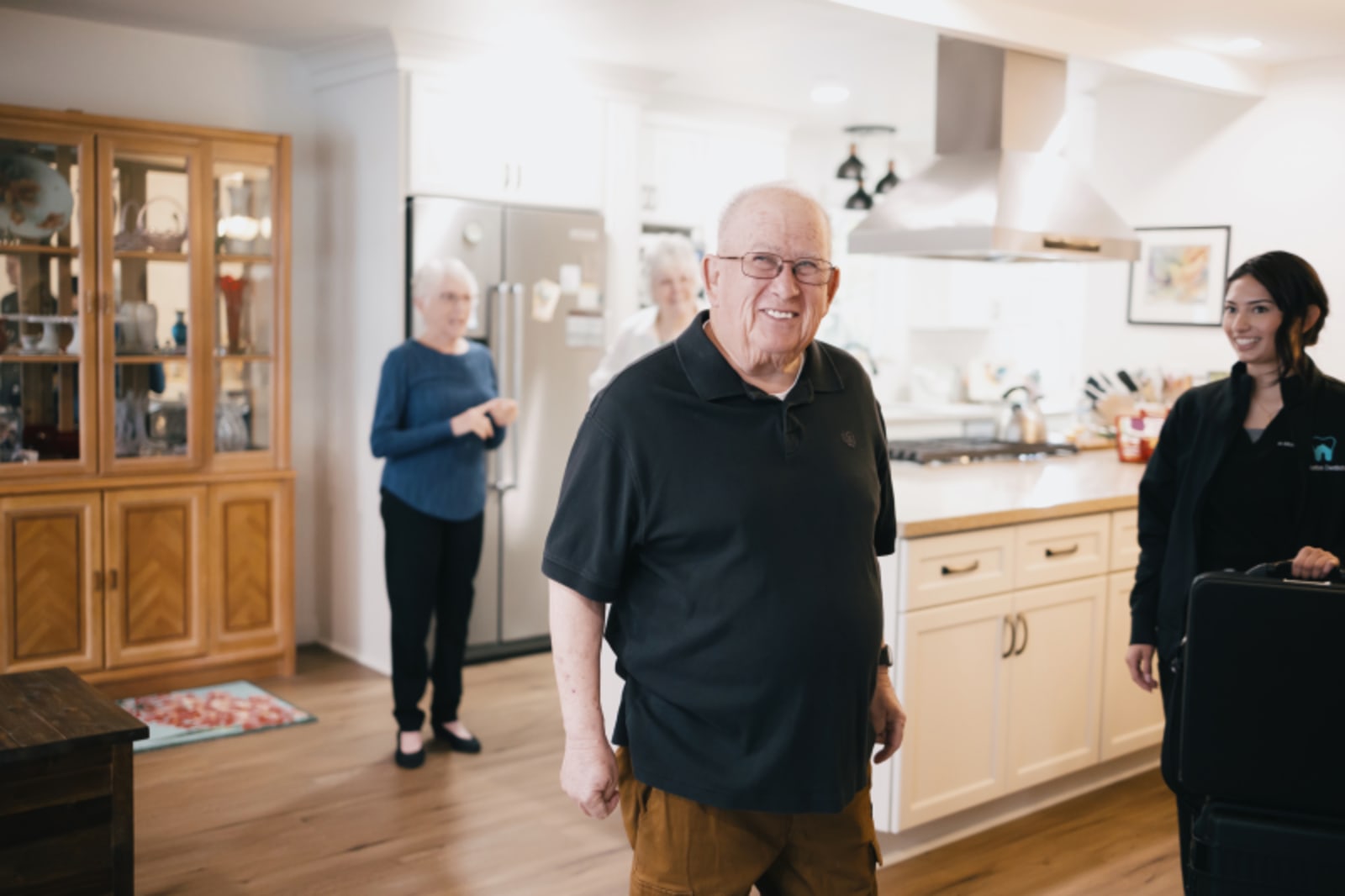
Seniors in pain don't always say so. That's one of the hardest truths families run into when a loved one has been homebound for a long time, especially when cognitive decline is part of the picture. The words just aren't always there. And even when they are, many older adults have quietly normalized discomfort over years of limited access to care.
During house call visits across Los Angeles, Orange, and San Diego Counties, Dr. Banner and his team regularly find abscesses that have clearly been present for months, cracked teeth worn down to almost nothing, or decay so advanced it's hard to believe the patient hasn't been in visible distress. The truth is, they often have been. It just didn't look the way most families expect pain to look.
Warning Signs That Look Like Everything Except Tooth Pain
If you're watching your parent and something feels off but you can't quite name it, these behavioral changes are worth paying attention to:
- Refusing foods they used to enjoy or suddenly avoiding anything that requires chewing
- Pocketing food in the cheek instead of swallowing
- Eating only soft things or quietly pushing plates away
- Touching or rubbing the face repeatedly
- Flinching during brushing or suddenly resisting oral care
In patients with dementia or Alzheimer's, the signs can look more like agitation, restlessness, or increased confusion, because pain that can't be communicated often comes out sideways. Dr. Banner and his team have extensive experience recognizing these patterns in patients who struggle to express discomfort verbally. You can read more about how dementia and Alzheimer's affect dental health and what families can watch for.
None of these signs guarantee something is wrong with the teeth, but they mean it's worth finding out. In Motion Dentists has built its entire approach around patients who can't easily speak up for themselves, which means Dr. Banner and his team know how to look for what isn't being said.
Why These Problems Compound When Access to Care Is Limited
Every issue covered in this article shares one thing in common: time makes it worse. When regular dental visits stop being possible, small problems become serious ones:
- Gum disease that could have been managed with a cleaning advances into bone loss
- A small cavity near the gumline becomes root decay, then an extraction
- Dry mouth goes unmanaged because no one adjusts the care plan
- Dentures that stopped fitting years ago keep causing sore spots that never fully heal
- Pain that should have been treated quietly shapes every meal, every conversation, every day
House Call Dentistry as Preventive Care
Regular access to a dentist who comes to the patient is not a luxury. It is preventive care. It is the difference between catching something early and managing a crisis. The In Motion Dentists team built our mobile dental services around exactly this reality: people who cannot easily get to a traditional office still deserve consistent, high-quality care, and that care should come to them.
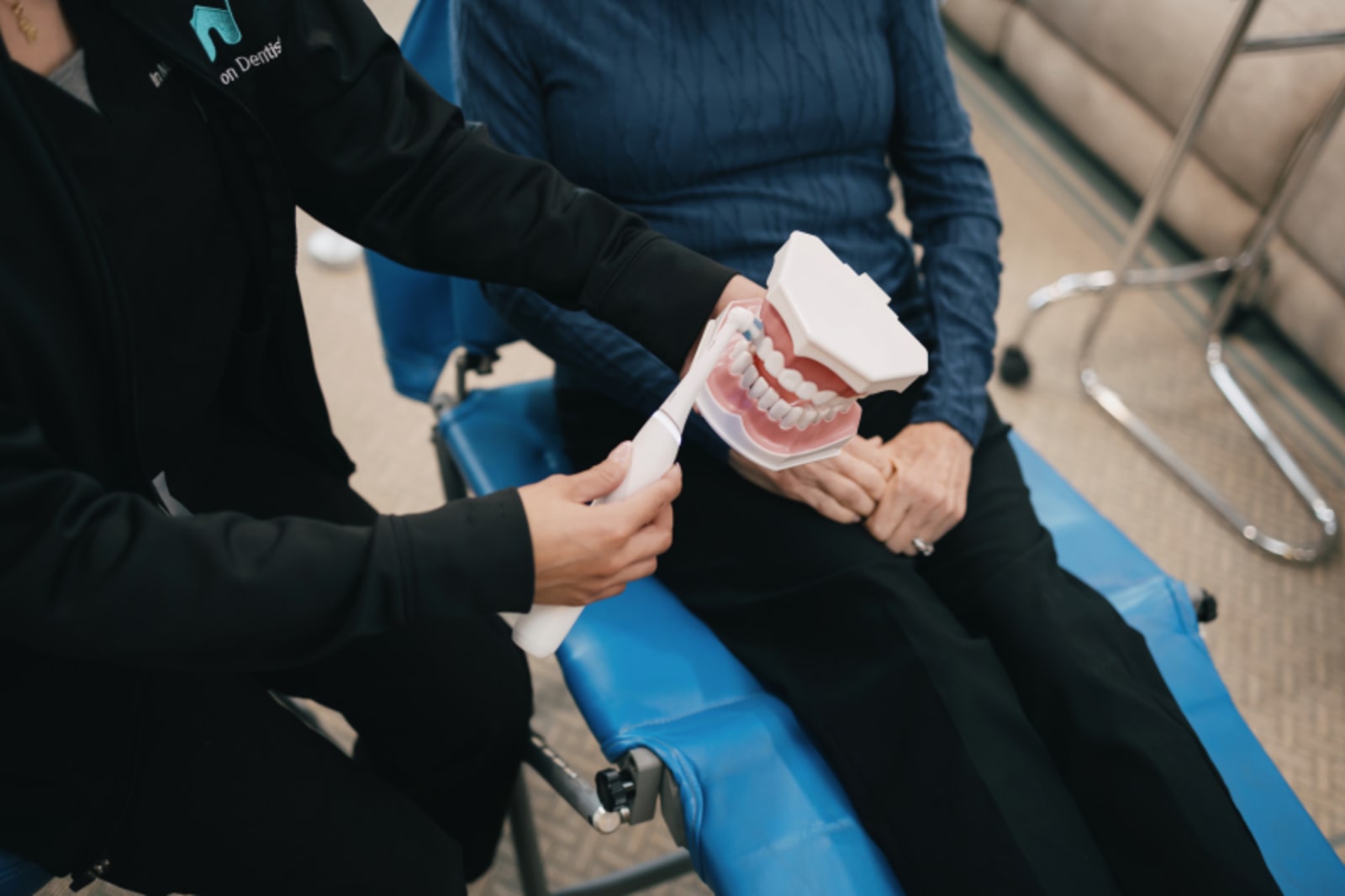
For families managing daily caregiving across Los Angeles County, Orange County, or San Diego County, keeping up with a loved one's dental health between professional visits matters too. The Assisted Teeth Brushing Program was designed for exactly that situation: recurring in-home oral care visits that help prevent the kind of gradual decline that turns manageable problems into serious ones.
The goal, whether it is a house call dental visit or ongoing brushing support, is keeping small problems from becoming serious ones, especially for seniors who need specialized dental care and may not have easy access to a traditional office.
If You're Wondering Whether Your Parent Needs a Visit, They Probably Do
We know it can feel overwhelming when your parent hasn't seen a dentist in years, or when getting them to a traditional office feels impossible. You don't have to have it all figured out before reaching out. That's what the first conversation is for.
When you call (626) 594-0374, Dr. Banner's team will talk through what's happening, where your parent is living, and what kind of care makes sense given their situation. We're straightforward about what can be addressed during a house call visit and what might need a different approach. No pressure, no runaround.
A few things worth knowing before you call:
- In Motion Dentists is a fee-for-service practice. Payment is due at the time of treatment, and we'll always be upfront about costs before any work begins.
- If you have a PPO dental insurance plan, we'll file the claim on your behalf as a courtesy so you can receive maximum reimbursement.
- Flexible payment options are available through Cherry financing, including 0% APR plans with no hard credit check required.
- If your parent needs ongoing oral hygiene support between visits, ask about our Assisted Teeth Brushing Program, a recurring in-home service available twice a month with no long-term commitment.
Dr. Banner and his team serve families across Los Angeles County, Orange County, and San Diego County. Wherever your parent is, whether at home, in assisted living, or in a memory care facility, we'll come to them.
Delivering Dentistry To You
Call (626) 594-0374 or request an appointment online to set up your first visit. We’ll be in touch soon.
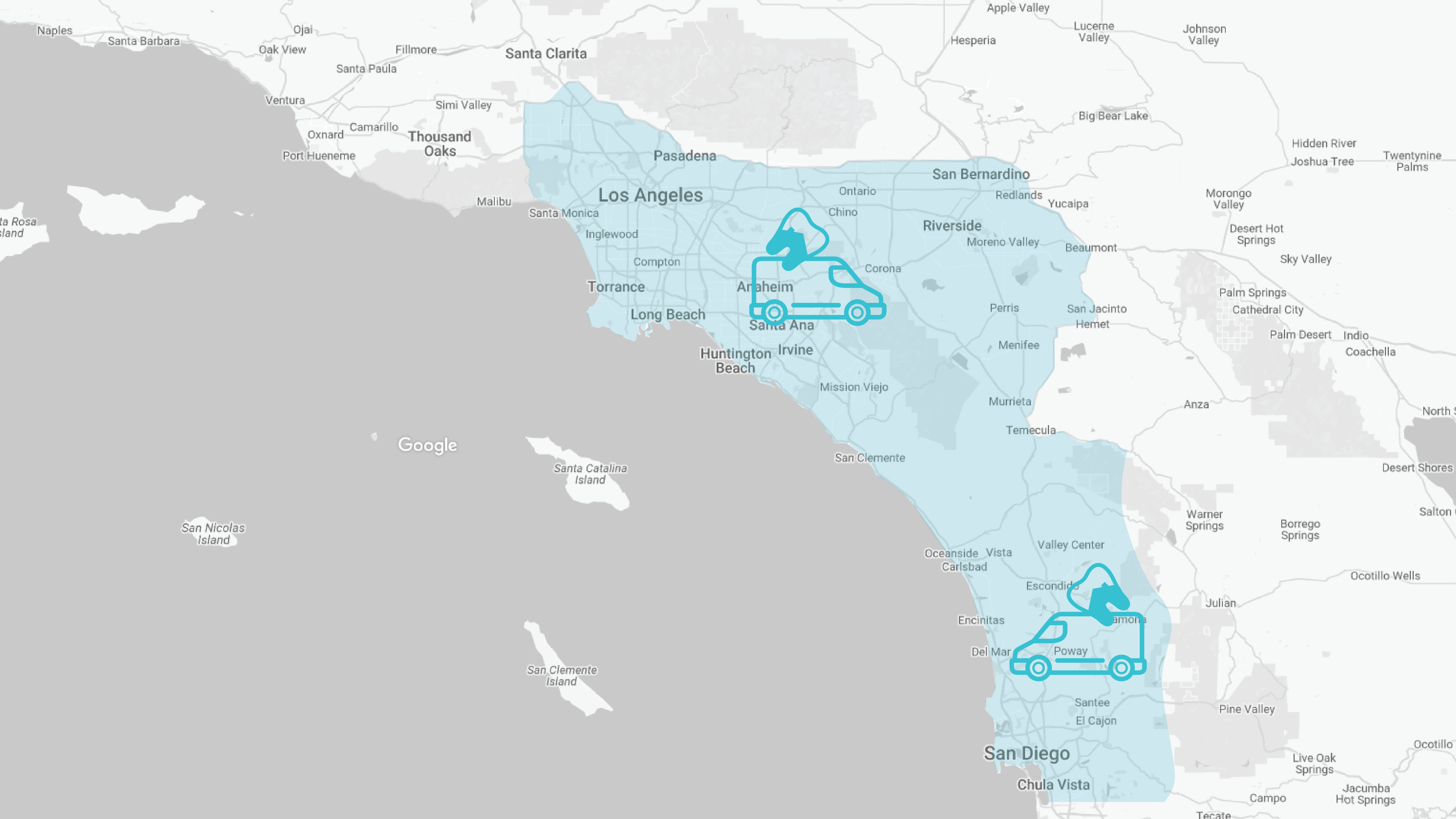
Areas We Serve

Headquarters