Mobile Dental Implants in Southern, California | In Motion Dentists
Your House Call Dentist in Southern California
Mobile Dental Implants in Southern, California
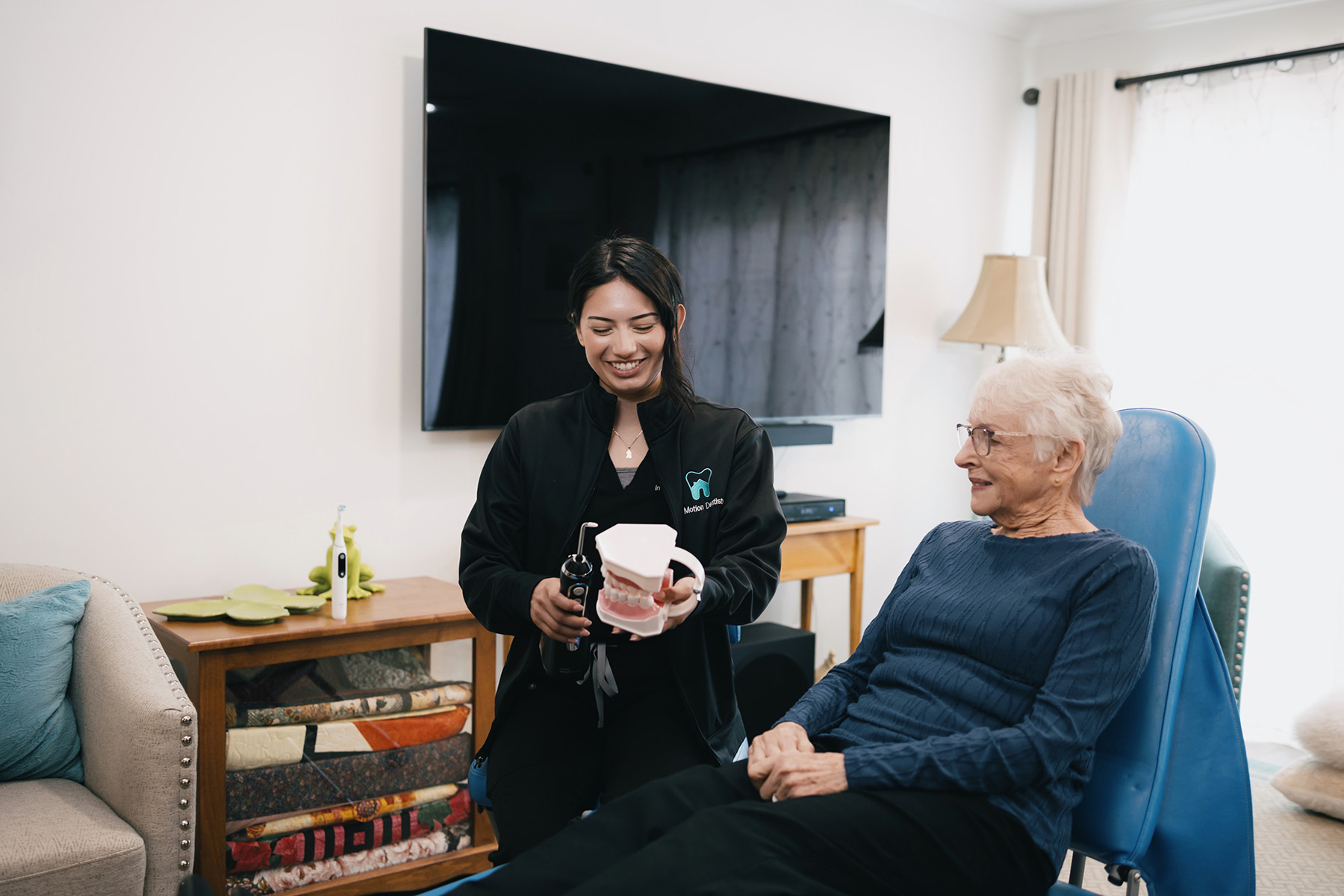
If someone you care for is missing teeth and getting to a dental office has become too hard, you still have good options. Dr. Banner and the In Motion Dentists team bring much of the dental implant process directly to the patient, whether they're in a private home, an assisted living community, or a memory care setting across Los Angeles County, Orange County, and San Diego County. A dental implant replaces a missing tooth with a stable, natural-looking result that helps your loved one chew, speak, and feel like themselves again.
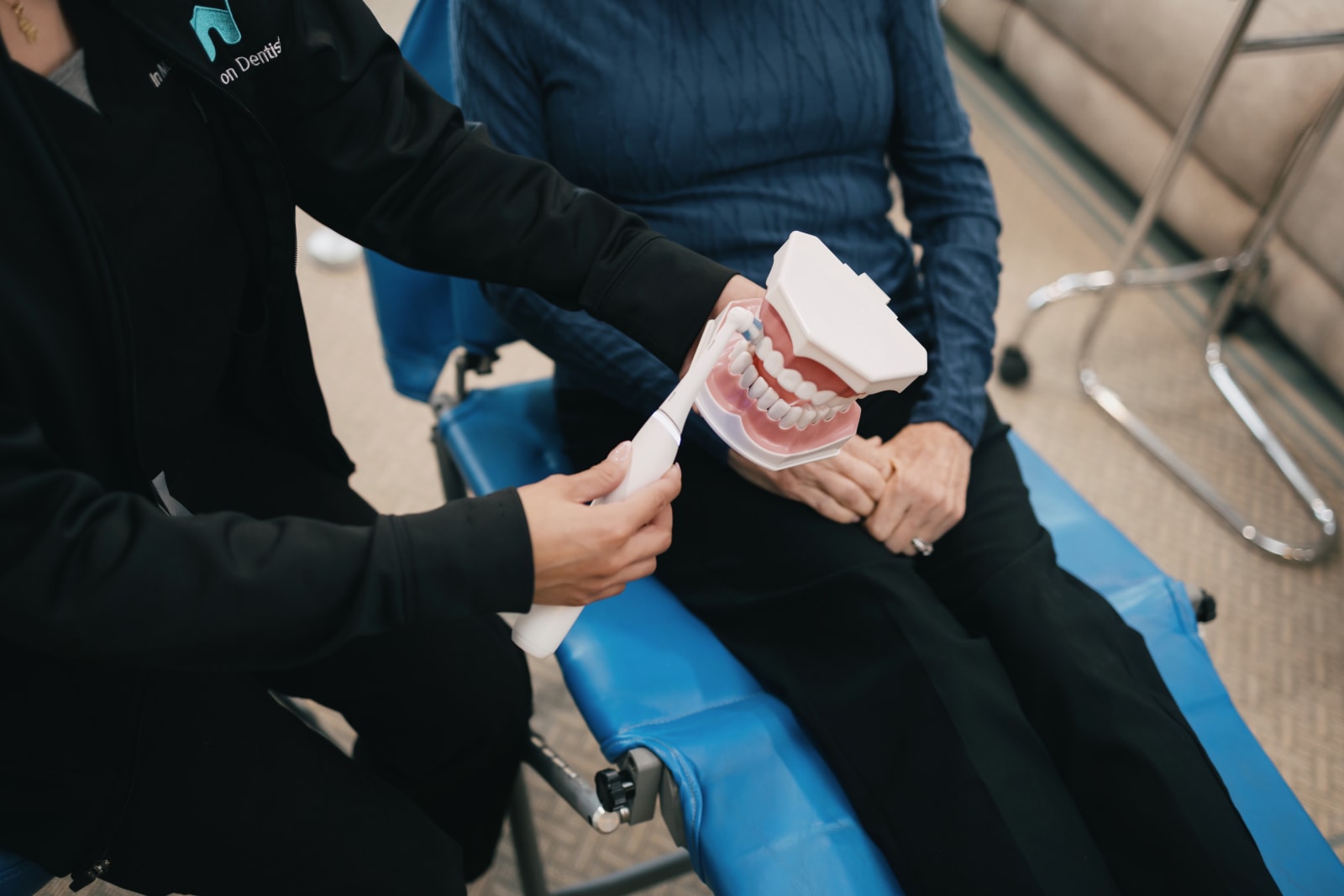
Our house call dentistry was built for patients who are elderly, homebound, or living with physical and intellectual disabilities. This page walks through what implants involve, what we can do in the home, and how to take the next step. When you're ready, call us at (626) 594-0374.
Quick Takeaways
- It starts with a visit, not a commitment. The first step is an in-home evaluation of the teeth, gums, and bone, then an honest conversation about whether implants are a good fit.
- Implants are a process, not one appointment. Plan for several visits over a few months while the implant fuses with the bone.
- Sometimes another option is smarter. For some patients a bridge or denture is more practical, and we'll say so plainly.
- Cost is shared upfront. We tell you the cost in plain terms, submit claims to your PPO for reimbursement, and offer financing if you'd rather spread payments out.
- You don't need everything figured out first. That first call is simply about getting you guidance.
What a Dental Implant Actually Is
A dental implant is a small titanium post that takes the place of a missing tooth root. We set it into the jawbone, and over a few months the bone grows snugly around it and locks it in place. That fusing process is called osseointegration, which simply means the post becomes a solid anchor. Once healed, it can hold a crown, a bridge, or a secured denture on top.
Families like implants because the finished result behaves like a real tooth. Nothing slips while eating, nothing has to come out at night, and the replacement blends in. Since we deliver care in the home, all of this can be planned wherever the patient is most comfortable.
How the Process Works at Home

Implant care moves through clear stages. Some happen right in the home; others, depending on the patient's health and how involved the surgery is, may be handled in partnership with a surgical setting. We'll tell you which is which before anything begins.
- Evaluation and planning. We arrive with portable equipment, assess the mouth, take X-rays, and review medical history and medications to see whether there's enough healthy bone and gum tissue to support an implant.
- Preparing the site. If a damaged tooth needs to come out first, or other problems need attention, we handle those and allow healing time.
- Placing the implant. The titanium post is positioned in the jaw. We work around the patient's comfort, whether they're in a recliner, a wheelchair, or a bed.
- Healing and integration. Over the following months, the bone fuses to the post. This stage asks for nothing more than gentle daily care, and our in-home hygiene visits can help keep the area clean.
- The final restoration. Once everything is solid, we attach the custom crown, bridge, or denture that goes on top.
Why Families Consider Implants
- Stable chewing. Implants don't shift, so eating gets easier, which matters a great deal for nutrition in older patients.
- Protection for the jaw. When a tooth is missing, the jawbone underneath tends to shrink. An implant helps hold onto that bone.
- No leaning on neighboring teeth. Unlike a bridge, an implant doesn't require reshaping the healthy teeth on either side of the gap.
- A natural look. A well-planned implant blends right in, often giving confidence back along with function.
- Long-term value. Cared for well, implants are one of the most durable tooth-replacement options available.
Is an Implant the Right Fit?
Implants work best for patients with enough healthy bone, stable gum tissue, and an overall condition that supports healing. Plenty of seniors turn out to be good candidates; others aren't, and that's a conversation we'd rather have early. Because we assess your loved one right where they're most comfortable, we can take a careful look without anyone having to travel.
A few things can make implants impractical: significant bone loss, complex medical conditions, limited ability to tolerate a procedure, or a situation where keeping the implant clean every day won't be realistic. When that's the picture, we'll walk through alternatives like dentures or a bridge. The goal is to land on what your loved one's mouth can genuinely handle. If you'd like to compare, our overview of teeth replacement options for older patients is a helpful read.
Timeline and What to Expect
From the first evaluation to the final restoration, the process usually spans several months, mostly because the bone needs time to fuse with the post. The milestones:
- Visit one: evaluation, X-rays, and a discussion of whether implants make sense.
- Preparation: any extractions or treatment of existing problems, with healing time as needed.
- Placement: positioning the implant post.
- Healing: typically a few months of integration.
- Restoration: attaching the crown, bridge, or denture, plus any small adjustments.
We don't rush these appointments. For patients living with dementia, anxiety, or mobility challenges, a slower pace in a familiar setting makes the experience far more manageable. If a removable option turns out to be the better road, dentures are part of what we provide too.
Preparing Beforehand and Caring for Implants After
There's very little to do before a visit. Set aside a comfortable, well-lit spot where the patient can sit or recline, and have a current medication list and any relevant medical history handy. We bring everything we need with us.
After placement, some mild soreness and a few days of softer foods are normal. Long term, an implant asks for the same care as a natural tooth: gentle daily brushing, careful cleaning around the post, and regular checkups for gum and bone health. Many families keep up with this through our recurring in-home visits. For someone with limited dexterity or cognitive decline, a caregiver's help with daily cleaning makes a real difference in how long an implant lasts. Our broader senior dental care is built around patients who are homebound or living in assisted living.
Cost and Financing
The cost of implants depends on how many are placed and what restoration goes on top, so there isn't one number that fits every situation. When you call or sit down with us, we share the cost upfront and in plain terms.
We're a fee-for-service practice, which means full payment is due at the time of treatment. As a courtesy, we gladly submit claims to your PPO insurance so you receive any reimbursement you're owed. For families who'd rather spread payments out, we offer financing through Cherry, with 0% APR options and no hard credit check. What you're paying for is quality care delivered where your loved one feels safest, without the transportation, transfers, and long waits traditional visits often demand.
Why Families Choose In Motion Dentists

We built this practice around the people who have the hardest time reaching a dental office: seniors, medically complex patients, wheelchair users, and adults living with conditions like Alzheimer's, Parkinson's, autism, cerebral palsy, and Down syndrome. Dr. Banner has spent more than a decade providing house-call dentistry, and our doctors are active leaders in organized dentistry across the region.
Bringing implant care into the home takes more than portable equipment. It takes patience, sound clinical judgment, and a team that knows how to adapt to medical, behavioral, and physical limitations while keeping the experience safe and dignified. We work closely with you, your caregivers, and facility staff, and we'll always be clear about what can happen at home and what may need a surgical setting. To understand how our model differs from a traditional office, see our page on what makes us different.
Frequently Asked Questions
Can dental implants really be done at home?
Much of the implant process, including the evaluation, planning, X-rays, and final restoration, can be handled in the home with our portable equipment. Depending on the patient's health and how complex the surgery is, certain steps may be best completed in a surgical setting. We'll tell you exactly what to expect before we begin.
Is my elderly parent too old for implants?
Age by itself isn't the deciding factor. What matters more is bone health, gum condition, overall medical status, and whether the implant can be kept clean afterward. Plenty of seniors do well with implants, and our senior dental care team will look at the full picture and give you an honest recommendation.
How long does the whole implant process take?
Plan for several months, mostly because the bone needs time to fuse with the post. It usually involves a few visits spaced across that timeline, and we never rush any of them.
What if implants aren't a good fit for my loved one?
That happens, and it's perfectly fine. When implants aren't the most practical choice, we'll talk through alternatives like dentures or a bridge and help you pick the option your loved one's mouth can realistically support.
Do you take insurance for implants?
We're a fee-for-service practice and submit claims to your PPO on your behalf so you can receive any reimbursement you're owed. The Cost and Financing section above has the full details on payment and financing.
Which areas do you serve?
We bring house-call dental care to families throughout Los Angeles County, Orange County, and San Diego County.
Let's Talk About What's Possible
If you've been worried about a loved one's missing teeth and weren't sure care was even realistic anymore, there's a path forward. We'll come to them, assess things gently, and help you understand whether implants or another option like dentures is the right next step.
Call us at (626) 594-0374 or reach out online. One conversation is often all it takes to trade the worry for a clear next step and some peace of mind.
Headquarters