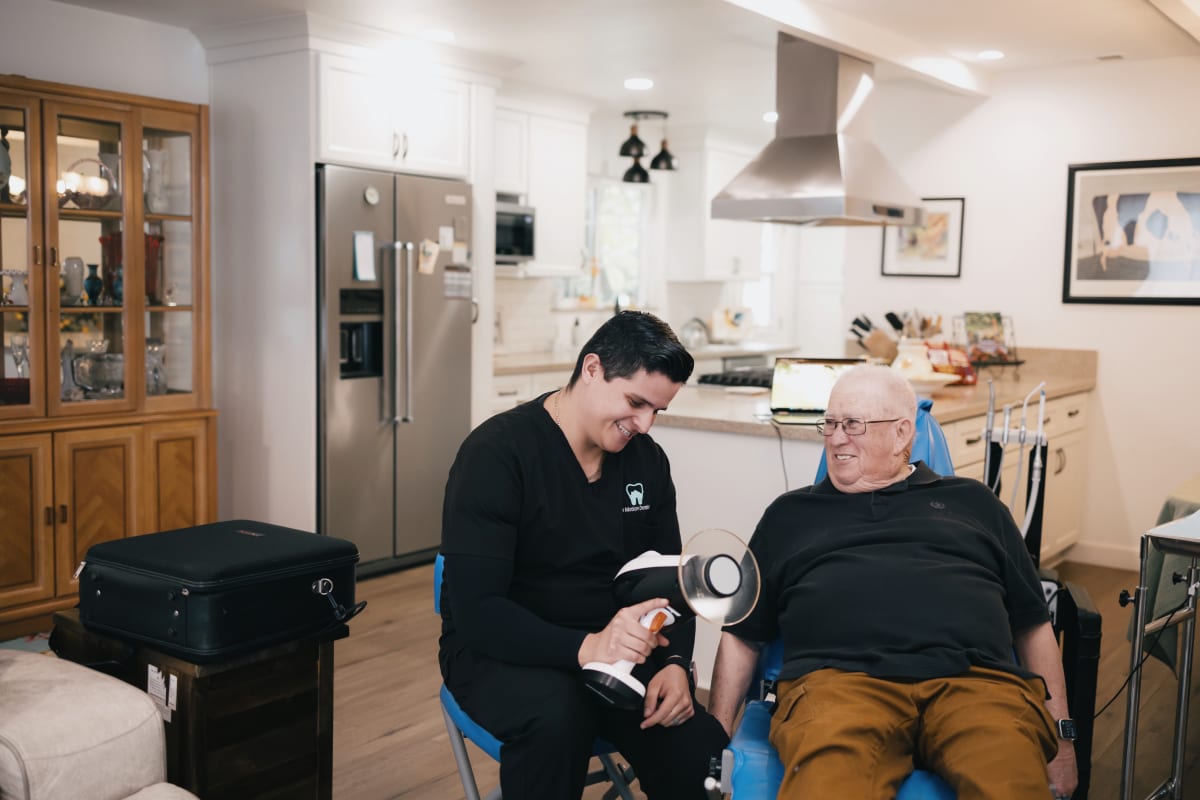
Dental Problems That Quietly Build in Seniors Who Have Been Homebound for Years
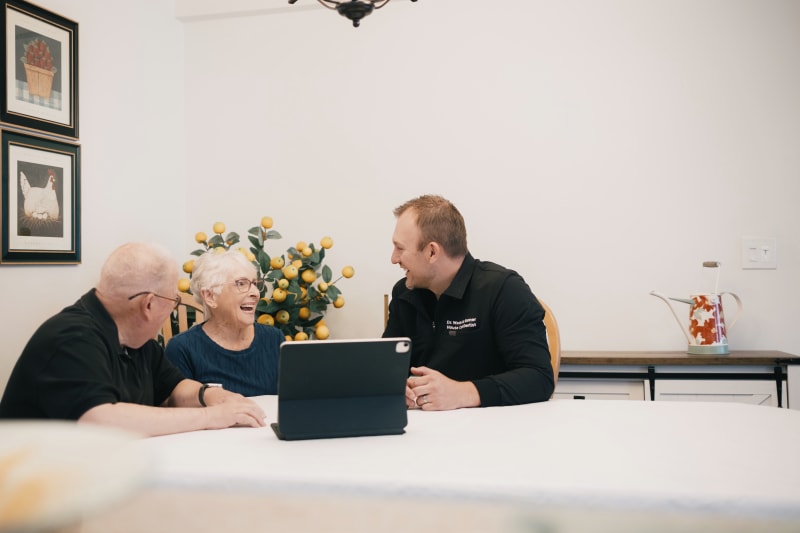
Sometimes it happens at the dinner table.
Your parent pushes food to one side of their mouth, eats slower than usual, or quietly sets down a piece of chicken they would have finished without a second thought a year ago. Other times it's more obvious: a broken tooth you can see when they smile, breath that wasn't there before, or a wince they try to hide when they take a sip of something cold. You notice it, and then you feel the familiar mix of guilt and worry that so many adult children carry: How long has this been going on? Why didn't I catch it sooner?
Dental care is one of the first things that quietly slips when getting to an office becomes difficult, and most families don't realize how far things have progressed until they're right there, looking at it. You're not alone in that moment, and noticing it now still matters.
When dental care lapses for years in a senior, problems don't wait. They compound quietly, often without obvious pain, until something breaks down enough to get attention. What we've learned through Dr. Banner's 10+ years of house call dentistry is that most of what accumulates can be assessed and treated without your parent ever leaving the house. We bring professional dental care directly to seniors throughout Los Angeles County, Orange County, and San Diego County using the most advanced portable dental delivery system available, so that a lapse in care doesn't have to mean a dead end.
What You'll Take Away From This Article
- Don't wait for obvious pain: dental problems in seniors often progress silently for years before causing noticeable discomfort
- Watch for subtle changes: eating slower, avoiding certain foods, or favoring one side of the mouth are early warning signs
- Most accumulated problems can be treated at home: comprehensive exams, cleanings, fillings, and extractions are all possible using our portable dental equipment
- Start with a simple phone call: you don't need to diagnose the problem yourself; the first conversation with our team is just about understanding what's possible
Why Dental Problems Move Faster in Seniors Than You'd Expect
Most families aren't watching for a slow decline. They're watching for something obvious—a tooth that breaks, a complaint about pain, a visible change. And because dental problems in older adults often don't announce themselves that way, it's easy to assume things are fine when they really aren't.
Understanding why damage accelerates in aging adults isn't about pointing fingers. It's about biology, and once you understand what's actually happening in the mouth, the timeline starts to make a lot more sense.
The Perfect Storm: Why Aging Mouths Are More Vulnerable
In our years of providing house call dental services across Southern California, we see the same biological factors creating problems faster than families expect. Medication-related dry mouth is one of the biggest culprits—blood pressure medications, antidepressants, antihistamines, and diuretics all reduce saliva production. Without enough saliva to neutralize acids and wash away bacteria, decay moves quickly and quietly. At the same time, naturally thinning enamel from decades of chewing, grinding, and acid exposure wears down the tooth's protective layer, making bacteria's job much easier.
Receding gums expose root surfaces that don't have enamel protection—they're softer, more porous, and far more vulnerable to decay. Add in reduced daily hygiene from limited dexterity, cognitive changes, or simply finding brushing harder, and bacteria aren't being cleared away consistently. When you layer these factors together, you get a compounding effect. Each one makes the others worse.
The mouth that looked manageable two years ago can look dramatically different today, not because anything sudden happened, but because several slow processes were all running at the same time. This is exactly what we see regularly during first visits throughout Los Angeles, Orange, and San Diego counties. A parent who seemed fine at the last family gathering may have significant buildup, root decay, or gum disease that has been quietly progressing for months. It's not a failure of attention. It's a failure of access, and it's one of the core reasons we bring comprehensive dental care directly to patients. When getting to an office becomes difficult or impossible, the gap between visits grows, and in an aging mouth, that gap is rarely neutral.
What Actually Accumulates When Years Pass Without a Cleaning
Knowing that early intervention matters is one thing. Understanding what's quietly happening inside the mouth during the months and years between visits is another. The two pieces of information belong together, because it's hard to act on urgency you can't picture.
The Buildup You Can't Brush Away
Plaque hardens into tartar within days when not fully cleared, and once calcified against teeth and gumline, only professional instruments can remove it. Tartar creates rough surfaces that attract even more buildup, making the problem worse over time. What starts as simple gingivitis—redness, puffiness, bleeding that many dismiss—advances to periodontitis, a deeper infection breaking down bone and tissue.
Problems That Progress Silently
Cavities that could have been simple fillings become root canal treatment when left for a year or two. Teeth crack or wear down, especially in seniors who may not communicate discomfort clearly or have adapted to the pain. By the time a tooth feels loose, significant bone and tissue damage has already occurred.
Special Concerns for Denture Wearers
- Poor fit from bone changes: Dentures that once fit well gradually stop fitting as underlying bone changes shape
- Sore spots and eating difficulties: Ill-fitting dentures cause pain and can accelerate jaw bone loss
- Abandonment: Many patients quietly stop wearing dentures rather than saying something, creating nutritional consequences
There's also the connection between oral health and overall health that families often don't realize. Untreated oral infections don't stay contained—chronic inflammation and bacteria in the mouth have been linked to heart disease, diabetes complications, and respiratory infections. This is particularly concerning for older adults who may already be managing complex medical conditions.
When we arrive at location, we don't find every patient has all these issues. Some have more, some fewer. But the only way to know what's actually present is a proper evaluation, because most of these problems don't announce themselves with obvious pain until they've already progressed. A professional cleaning and exam is what separates "probably fine" from actually knowing. And for patients who can't easily get to a traditional office, that evaluation can happen right where they are. If you're not sure where to start, a call to our team at (626) 594-0374 is the first step toward getting a clear picture of what's going on and what care is realistically possible.
What a Home Dental Visit Can Realistically Address
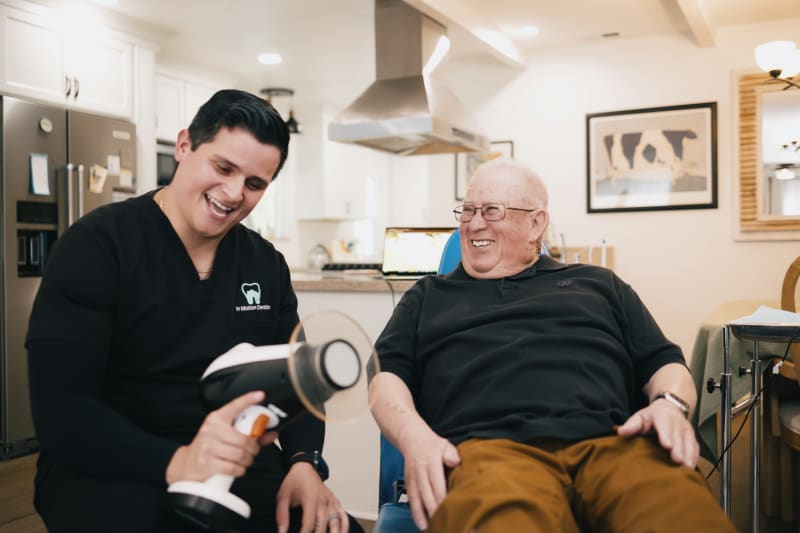
Most families calling us are genuinely surprised by how much can be done in a living room, bedroom, or care facility room. That surprise makes sense. For decades, the assumption has been that real dental care only happens in a clinical setting with a full chair, overhead light, and a wall of equipment. Dr. Banner's 10+ years of house call experience has shown that's simply not true anymore. Using our Aseptico Go Ultra Portable Dental System, we bring nearly every service available in a traditional office directly to patients across Southern California.
Services We Provide in Your Home
When we arrive at your parent's home, we can provide:
- Comprehensive oral exams with digital X-rays
- Professional teeth cleanings, even for patients who haven't had one in years
- Fillings and tooth extractions
- Denture adjustments, repairs, and evaluations
- Treatment for pain, infection, and broken teeth
- And much more!
For patients dealing with years of accumulated problems, this covers significant ground. We've treated seniors with dementia who couldn't tolerate a traditional office, wheelchair-bound patients who hadn't seen a dentist in a decade, and medically fragile individuals in assisted living facilities throughout Los Angeles, Orange County, and San Diego.
Your Parent Hasn't Been to a Dentist in Years — What to Do Next
Finding out how much has quietly built up in a parent's mouth is a lot to sit with. There's often guilt wrapped up in it, and a kind of helplessness that comes from not knowing where to even begin. That's a completely understandable place to be, and this situation is more recoverable than it probably feels right now.
Most of what we find in seniors who haven't had care in years is treatable. It takes assessment, a realistic plan, and the right team, but it is not hopeless. Families can get surprised by how much can be done once someone actually comes out, takes a look, and helps them understand what they're working with.
That's exactly what we do. Dr. Banner and his team bring more than 10 years of house call dentistry experience directly to homebound seniors across Southern California. We handle the full evaluation on-site and walk families through what's needed in plain, honest terms.
Next Steps for Families
The process starts with a simple call for a consultation. You don't need to diagnose anything yourself or have all the answers before reaching out. When you call, expect a conversation, not a sales pitch. We'll ask about your parent's situation, mobility, and concerns to understand what's needed.
From there, we can schedule when it works for your family wherever you are across SoCal. Your job is getting us there; our job is figuring out what's going on and what can be done about it.
If you're ready to take that first step, give us a call at (626) 594-0374.
Delivering Dentistry To You
Call (626) 594-0374 or request an appointment online to set up your first visit. We’ll be in touch soon.
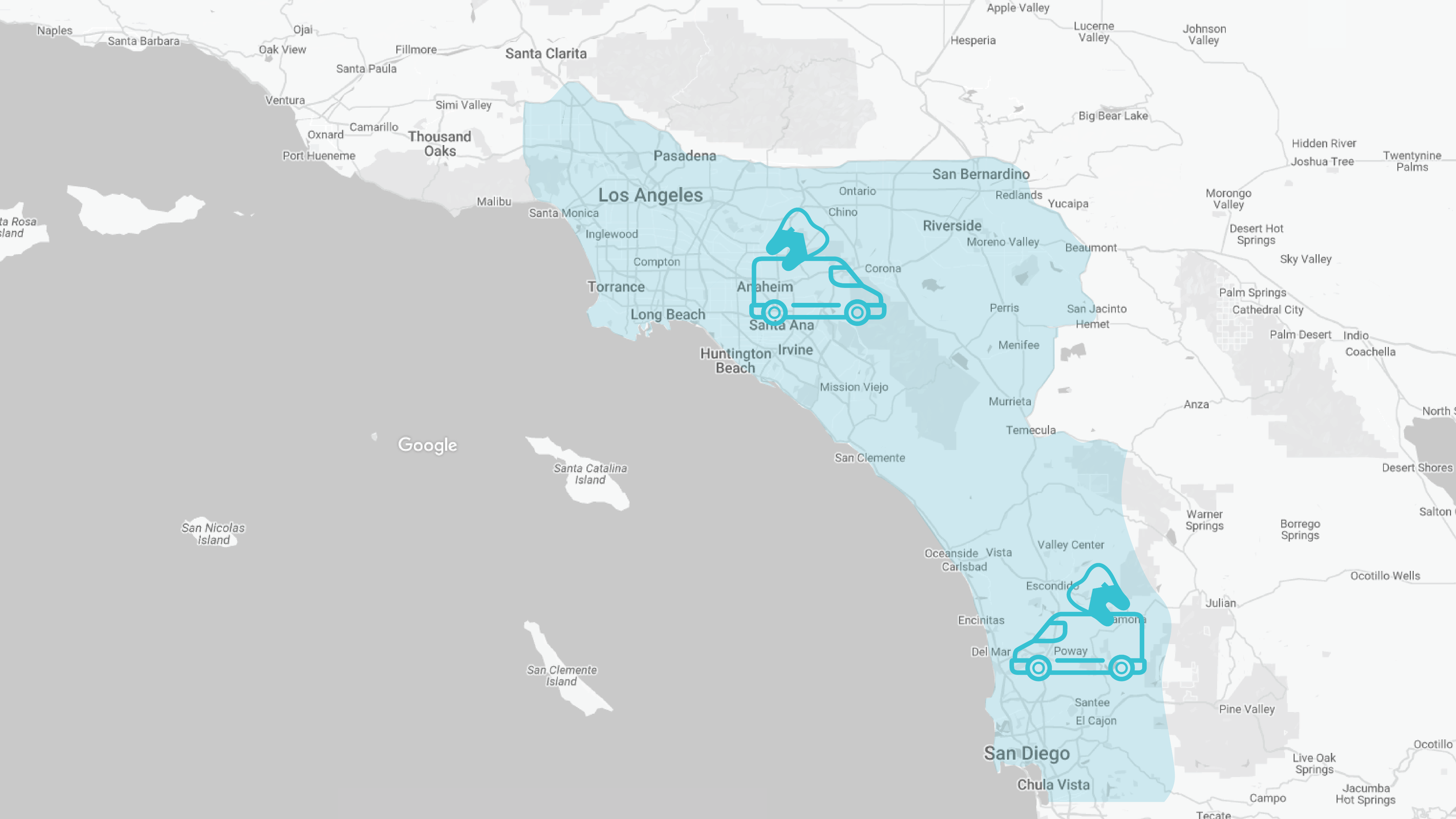
Areas We Serve
Headquarters