Mobile Tooth Extractions at Home in Southern California
Your House Call Dentist in Southern California
Tooth pain shouldn’t mean an exhausting day of travel, waiting rooms, and stress. In Motion Dentists brings professional, compassionate tooth extraction care to you—at home, in assisted living, or at a care facility—using hospital‑grade portable equipment and gentle local anesthesia. For third molars (wisdom teeth) or cases that require IV/general anesthesia, we coordinate care in our La Verne office or with trusted specialists so you’re safe, comfortable, and fully supported from start to finish.
What to Expect From Your At‑Home Extraction Visit
- Time commitment: Most visits take 45–90 minutes, including on‑site digital X‑rays when indicated.
- Upfront pricing: Clear, written estimates before treatment. We’re fee‑for‑service and file PPO claims as a courtesy for potential reimbursement.
- Ideal for: Seniors, homebound patients, people with disabilities or agoraphobia, and anyone who prefers private, concierge‑style care.
- Recovery: Light activity the same day. Peak soreness/swelling within 24–72 hours; soft‑tissue healing typically 1–2 weeks.
If your situation is urgent, see how we prioritize care on our Emergency Dentistry page for quick guidance and next steps.
Why House‑Call Extractions Are a Game‑Changer in SoCal
In a region where traffic and distance can turn a simple appointment into a full‑day ordeal, house‑call dentistry removes the barriers.
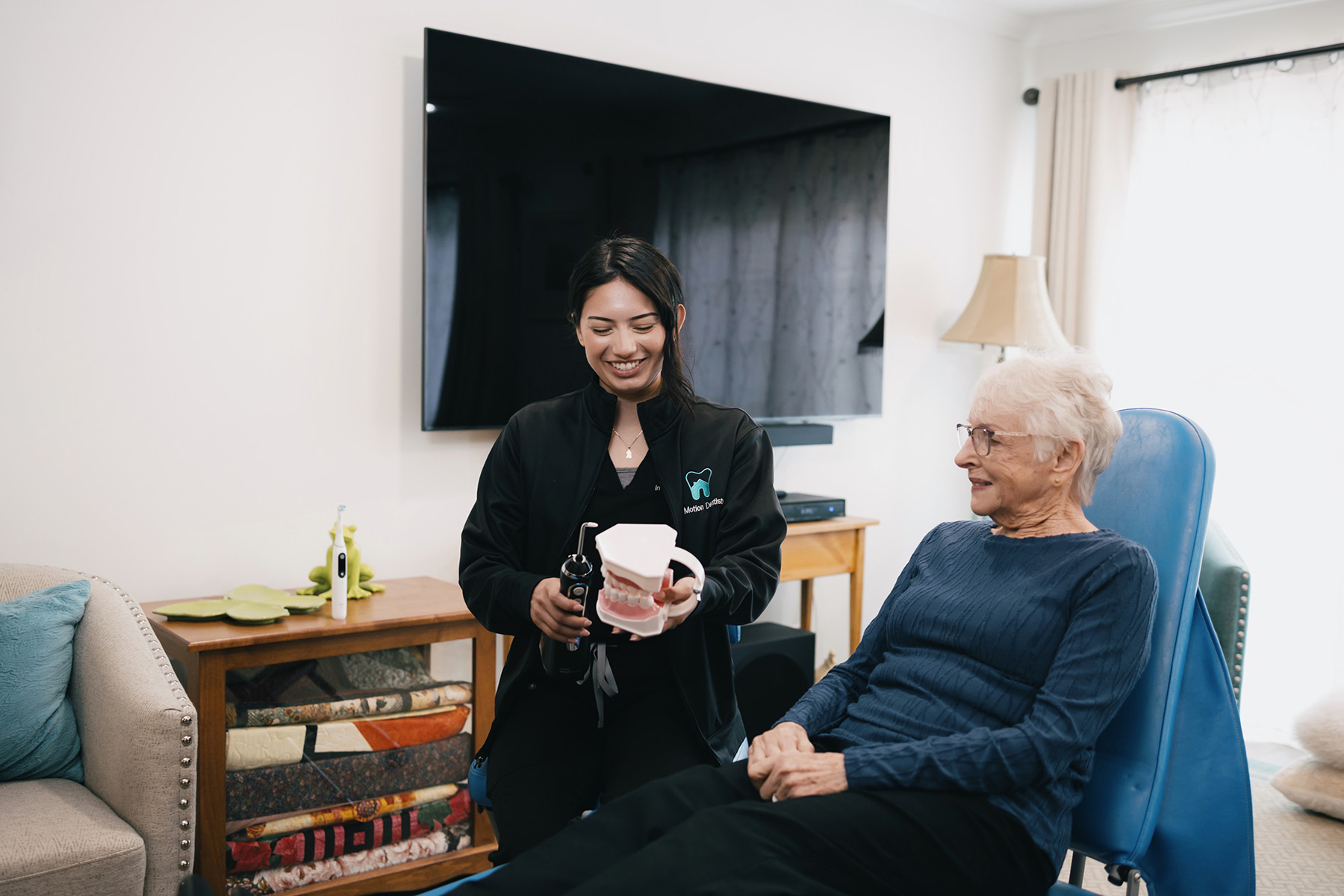
For many patients—especially those living with dementia, autism, cerebral palsy, post‑stroke limitations, or severe dental anxiety—receiving care in a familiar space is safer and more dignified. We bring a complete, professional setup into your home or room (you never have to get inside a van or trailer), so you get the quality of an office visit with the comfort of home. Learn more about how our House Call Dentistry works and why families describe the experience as accessible, personalized, and easy.
Who Benefits From a Mobile Dentist for Extractions?
- Bedbound or wheelchair users who can’t easily transfer
- Individuals with developmental or intellectual disabilities
- Seniors in assisted living, memory care, or skilled nursing
- Patients with agoraphobia or high dental anxiety
- Caregivers who need dependable, on‑time visits without transportation logistics
If this sounds like you or someone you know, we’re here to help.
How We Do Things Differently
- Innovative, hospital‑grade portability: We use digital radiography, an intraoral camera, and the Aseptico Go Ultra Portable Dental System for precise, efficient care in tight spaces.
- Patient‑first communication: We explain options honestly so treatment “makes sense to the patient or the legal guardian.”
- Safety without compromise: We follow CDC/OSHA and California Dental Board standards for sterilization and infection control.
- Where you are most comfortable: Many patients are treated in their bed or favorite chair, with caregivers invited to participate when permitted.
See how we tailor care for Special Needs patients and how our Senior Dental Care model keeps older adults healthier and more comfortable.
How a Mobile Extraction Visit Works (Step by Step)
- Triage & connection: We start with a phone or secure video consult to review symptoms and medical history. Telehealth helps us prioritize tooth pain and schedule appropriately.
- Easy scheduling: We coordinate a time that fits your day and strive to arrive within 15 minutes of your appointment window.
- On‑site setup: In about 7–10 minutes, we create a clean, efficient treatment area in a living room or bedroom with a standard electrical outlet.
- Diagnosis: When indicated, we take digital X‑rays and complete an exam to confirm whether extraction is best, or if a restorative option (like a root canal and crown) could save the tooth.
- Local anesthesia & extraction: We thoroughly numb the area, remove the tooth, and achieve hemostasis with gauze and post‑op checks.
- Aftercare & follow‑up: You’ll receive written instructions, pain‑control guidance, and signs to watch for. Questions afterward? We’re a phone call away so you can always reach us for any follow ups.
Curious about the flow of a typical in‑home exam? See How In‑Home Dental Care Works for a behind‑the‑scenes look at our setup and approach.
Comfort, Anesthesia, and Pain Management at Home
- Local anesthesia: Standard for in‑home extractions to keep you comfortable.
- Sedation options: We do not provide IV or general anesthesia in the home setting. For deeper sedation needs, we coordinate treatment in our La Verne office, a surgical center, or hospital as appropriate. Select cases may be considered for oral sedation following a careful medical review.
- Pain control: We’ll outline a simple plan using cold compresses, soft foods, and over‑the‑counter medications, and let you know when prescription support may be appropriate.
- Anxiety support: We work at your pace, use calm, clear communication, and adapt lighting, sound, and positioning to reduce sensory triggers. If you’re exploring sedation pathways, our Sedation Dentistry page explains how we safely deliver oral, IV, or GA—when the setting is appropriate.
Can a Dentist Pull a Wisdom Tooth at My House?
For safety and predictability, we do not remove third molars (wisdom teeth) in‑home. We can evaluate with portable X‑rays and then coordinate removal at our office or refer to an oral surgeon when needed. If you’re considering timing and recovery, our Wisdom Teeth Removal page explains the process step‑by‑step.
Equipment & Safety: What We Bring
- Aseptico Go Ultra Portable Dental System (professional‑grade dental unit)
- Digital X‑rays and intraoral camera for on‑site diagnosis
- High‑volume evacuation and a complete set of sterilized instruments
- Strict infection‑control protocols identical to a fixed dental office
Our services are performed inside homes and facilities—not in a converted van or trailer—so you get privacy and comfort every time.
Preparing Your Home for a Mobile Dentist Visit
- Choose a clean, well‑lit space with a nearby outlet (living room, bedroom, or quiet common room).
- Have a current medication list and any medical directives available.
- Let us know about mobility aids or sensory accommodations to plan ahead.
- Caregivers are welcome to be present with patient permission.
Visit Your First Visit for what we check, how we set up, and when same‑day treatment may be appropriate.
Mobile Dental Care Cost, Insurance, and Access
We’re a fee‑for‑service practice. You’ll receive a written estimate before treatment, pay at the time of service, and we’ll submit PPO insurance claims as a courtesy so you can receive any eligible reimbursement. We are not in‑network with dental plans and do not accept Denti‑Cal/Medicaid. If you need to stage treatment for budget or health reasons, we’ll map out an honest plan that respects your needs.
For professionals who value privacy and on‑demand access, our Executive Concierge Service offers a yearly retainer with direct contact, included preventive care, and no house‑call fees.
Our Southern California Service Areas
We crisscross SoCal each week to reach patients where they are:
- Los Angeles County
- Orange County
- San Diego County
- Riverside County
- San Bernardino County
Not sure if we can come to you? Check our Cities We Cover sections in our Service Area page or call our team. We’ll do our best to make things work out for you.
Mobile Tooth Extractions: Frequently Asked Questions
Can a dentist pull a tooth at my house?
Yes. We routinely perform simple and select surgical extractions at home or in care facilities using local anesthesia and portable X‑rays. We do not perform wisdom tooth removal in‑home and do not provide IV/general anesthesia outside clinical settings.
How does a mobile dental extraction compare with an in‑office extraction?
The clinical steps are nearly identical. The difference is the setting: we bring professional equipment to your location and adapt to your needs.
How much does an in‑home extraction cost?
Fees vary based on the tooth, complexity, X‑rays, and any additional procedures. You’ll receive a written estimate before treatment. We’re fee‑for‑service and file PPO claims as a courtesy after your visit.
What sedation options are available for at‑home extractions?
In the home setting we use local anesthesia. When deeper sedation is appropriate, we arrange care in our office or a surgical center. Select cases may be considered for oral sedation after medical review.
What pain management is available after an extraction?
Most patients do well with over‑the‑counter pain relievers, cold compresses during the first 24–48 hours, a soft‑food diet, and rest. You’ll receive clear written aftercare.
What equipment is used for a mobile dental extraction?
We use a professional portable dental unit (Aseptico Go Ultra), digital radiography, intraoral imaging, high‑volume evacuation, and fully sterilized instruments—mirroring a traditional dental office.
Do you have portable X‑rays for in‑home diagnosis?
Yes. Digital X‑rays help us confirm the diagnosis and determine whether extraction is the best route or if a root canal and crown could preserve the tooth.
Can you help a homebound patient with disabilities or agoraphobia?
Absolutely. This is core to our mission. We tailor visits for mobility limitations, sensory sensitivities, and caregiver support. Explore our Special Needs and Senior Dental Care pages for details.
Are mobile dental clinics regulated?
Yes. We operate under California Dental Board regulations and follow CDC/OSHA infection‑control standards, delivering the same safeguards you expect in a traditional office.
How do house‑call dentistry and hospital dentistry differ for disabled patients?
We aim to provide comprehensive, comfortable care in place to minimize stress and travel. When hospital resources, IV/GA, or specialized environments are medically necessary, we coordinate those services with your care team.
Can you provide palliative extractions at home?
When the goal is relief and improved comfort, we offer gentle, efficient extractions and thoughtful aftercare. We’ll review benefits, risks, and timing with family and caregivers to ensure everyone is aligned.
What should I do for a severe toothache if I’m homebound?
Call us. We can triage by phone or telehealth, guide you on protecting the area, and prioritize an urgent house‑call visit when possible. For red‑flag symptoms and immediate steps, see our Emergency Dentistry resources.
Headquarters