Get Dental Bridges in Southern California with In Motion Dentists
Your House Call Dentist in Southern California
Dental Bridges Brought To You By Mobile Dentists
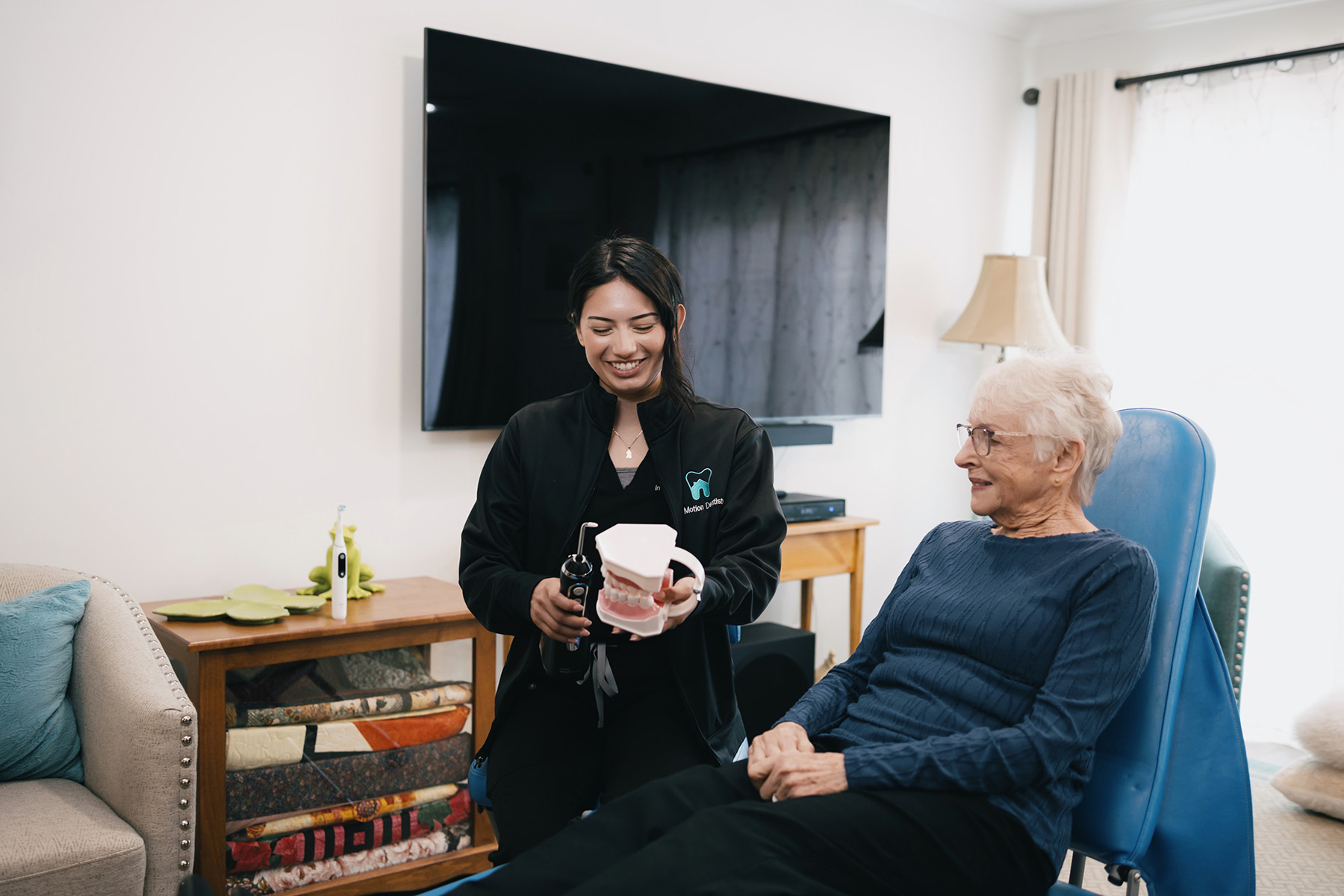
When a loved one is missing one or more teeth, a dental bridge can fill that gap, restore comfortable chewing, and bring back a natural-looking smile. Dr. Wade Banner and the team at In Motion Dentists do this work as house calls, so there's no need to load anyone into a car or sit through a waiting room. We come to the home, assisted living apartment, or care facility, and we bring the same careful planning a bridge deserves.
If you're arranging care for an aging parent, a spouse, or someone with special needs, this page covers what a bridge is, who it suits, and what to expect when it's done in a familiar setting. We provide senior dental care across Los Angeles County, Orange County, and San Diego County, and we also offer dentures for those who need a different tooth-replacement option.
Quick Takeaways
- A bridge replaces missing teeth using the teeth on either side as anchors, so it stays put without coming out at night like a removable denture.
- It usually takes a few visits, all done at the patient's home or care facility through our house call dental care.
- Ask us during the first visit whether a bridge is the right fit. The answer depends on the health of the surrounding teeth and how easily the bridge can be kept clean.
- We share pricing plainly when you call or at the first visit, and financing is available.
- The next step is a conversation. Contact us or call (626) 594-0374.
How a Dental Bridge Works
A bridge is a custom-made set of connected teeth. The two teeth beside the gap get small crowns (the anchors, or abutments), and a replacement tooth sits in between to fill the empty space. Once cemented in, it doesn't move.
How the process typically goes when we come to you:
- Evaluation. We look at the gap, neighboring teeth, gums, bite, and the patient's ability to keep things clean to see whether a bridge makes sense. If a bridge isn't the right fit, we can talk through options like dentures or dental implants.
- Preparation and impressions. We gently shape the anchor teeth and take an impression or scan so the bridge fits precisely.
- Temporary bridge. A temporary piece protects the prepared teeth while the final bridge is made.
- Delivery and fitting. We check the look, feel, and bite, then cement it in place.
- Follow-up. If a sore spot or bite adjustment comes up, we come back and fine-tune it.
The whole thing is done with professional portable equipment, set up in a clean, organized space where the patient is most comfortable. Learn more about how our house call dental care works.
Why a Bridge Can Make Such a Big Difference
- Easier eating. Filling the gap gives back chewing surface, so more foods are back on the menu.
- Keeps teeth in place. When a tooth is missing, the ones around it can drift and tilt. A bridge holds that space and keeps the bite stable.
- It stays put. Unlike a removable partial denture, a bridge is fixed, so there's nothing to take in and out, which matters for patients who'd struggle with that routine.
A well-planned bridge also blends in with the surrounding teeth and often helps speech sound more natural again once the gap is filled. Many patients say it feels like getting part of their normal mouth back, and that restored confidence can matter just as much as the comfort of eating and speaking. If a bridge isn't the right fit, our team can talk through other options like dental implants during a house call visit.
Is a Dental Bridge the Right Fit For You or Your Loved One?
A bridge tends to be a good option when someone is missing one or a few teeth in a row and the neighboring teeth are healthy and strong enough to carry the load. Because those anchor teeth take on extra responsibility, we look closely at their condition, the gums, bone support, and the bite before recommending one.
Cleaning matters too. A bridge has to be cleaned carefully underneath, so we consider whether the patient or caregiver can realistically keep up. For someone with limited dexterity or memory challenges, we'll talk through what daily care would look like, often during a house call hygiene visit.
A bridge may not be the best route if the surrounding teeth aren't healthy enough to support it, or if a different solution fits better. In those cases we'll walk you through the alternatives honestly, including removable dentures or dental implants. We'll always tell you what we'd genuinely recommend.
How Long Dental Bridge Treatment Takes and What to Expect
A bridge is usually a few visits rather than a single appointment, because it's custom-built and checked carefully before placement. A typical path:
- Visit one: evaluation, and if the anchor teeth are ready, preparation, impressions, and a temporary bridge.
- Visit two: fitting and cementing the final bridge once it returns from the lab.
- Follow-up as needed: small adjustments for comfort and bite.
If treatment such as managing decay or gum issues needs to happen first, that can add time. We never rush these visits. Working at the patient's own pace, in their own space, is one of the biggest reasons our house call dental care works for people who find a traditional office overwhelming.
Once the bridge is in, expect a short adjustment period as the mouth gets used to a restored space or slightly new bite. That's normal, not a sign anything's wrong. If you'd like to talk through your options, learn more about our senior dental care or explore our other restorative services.
Preparing for the Visit and Caring for the Bridge After
There's very little you need to do to get ready. A comfortable spot where the patient can sit or recline, a nearby outlet, and a bit of space to set up is plenty. If you're caring for someone with anxiety or dementia, let us know ahead of time so we can plan a calm visit. Our house call dental care is designed around patients who find it difficult to leave home.
After the bridge is placed, keeping it clean protects it long term:
- Brush twice a day, paying attention to the gumline around the bridge.
- Clean underneath the bridge using a floss threader or interdental brush; we'll show you or the caregiver how.
- Watch for soreness, looseness, or food trapping, and let us know so we can adjust it.
- Keep up with regular hygiene visits. For homebound patients, our in-home cleanings help keep the anchor teeth and gums healthy so the bridge lasts.
- If a tooth ever needs more support, our dental implants can be discussed as part of your long-term care plan.
Cost and Financing For Dental Bridges in Southern California
The cost of a bridge depends on how many teeth are being replaced, the condition of the anchor teeth, and whether any other care is needed first. We don't post prices because they change over time, but we'll tell you the cost plainly when you call or at the first visit. No vague answers, no runaround.
We're a fee-for-service practice, so full payment is due at the time of treatment. As a courtesy, we gladly submit claims to your dental insurance so you can receive your maximum PPO reimbursement. If you have questions about cost, our team is happy to walk you through it when you contact us or learn more about our house call services.
Why Families Choose In Motion Dentists For Mobile Dental Care
We've built our practice around the people who have the hardest time getting to a dentist: seniors, patients who are homebound or wheelchair-bound, and adults living with conditions like Alzheimer's, Parkinson's, autism, Down syndrome, and cerebral palsy. Dr. Banner has spent more than a decade providing house-call dentistry, and our doctors and hygienists understand how to do careful, technical work like a bridge within the real limits of a home or care facility.
Families are often surprised that something as detailed as a bridge can be done at home with the same planning and precision they'd expect anywhere else. We work with caregivers, explain what's realistic, and build a plan that fits the patient's condition and quality of life. We serve patients across Los Angeles County, Orange County, and San Diego County, and you can learn more about how house call dentistry works.
Frequently Asked Questions
Can a bridge really be placed during a house call?
Yes. We bring professional portable equipment and complete the same steps a bridge requires anywhere: planning, preparing the anchor teeth, impressions or scans, a temporary, and final delivery. The setting changes, not the standard of care. Our house call dental care is designed to deliver the same quality you'd expect in a traditional office.
How many visits does a bridge take?
Usually a couple of visits to prepare and place it, plus any follow-up for adjustments. If other treatment is needed first, that can add time. We'll lay out the plan clearly at the first visit.
How should we choose between a bridge and an implant?
It comes down to what the mouth can support, your timeline, and your budget. A bridge relies on healthy teeth beside the gap and is often faster, while a dental implant doesn't lean on the neighboring teeth but usually takes longer and costs more up front. We'll help you weigh what's most predictable for the patient.
Will the bridge look natural?
When it's planned well, the goal is for it to blend in with the surrounding teeth and restore both appearance and chewing. Most patients are pleasantly surprised by how natural it looks and feels once everything settles in.
How do we keep the bridge clean for someone who needs help with daily care?
Cleaning under the bridge is important, so we show caregivers how using simple tools like a floss threader or interdental brush. For patients who need ongoing support, our recurring in-home hygiene visits help keep everything healthy between appointments.
What if the bridge feels sore or off after it's placed?
A short adjustment period is normal. If a sore spot, high bite, or trapped food shows up, let us know and we'll come back to fine-tune it.
Let's Talk About What's Possible
If you're caring for someone living with missing teeth and getting to a dental office isn't realistic, a bridge may be a more comfortable, dignified option than you'd expect. Our team brings the same quality care you'd find in a private office directly to your home or care setting. You don't need to have everything figured out before you reach out. Call us at (626) 594-0374 and we'll listen, answer your questions, and help you decide on a sensible next step, right where your loved one is most comfortable.
Headquarters