Like
Dislike
Maybe your mom has been pushing food around her plate for weeks. Maybe your dad has been unusually irritable, flinching when he chews, or quietly skipping meals he used to enjoy. You haven't seen anything obviously wrong, but something keeps saying this isn't just aging. That feeling deserves to be taken seriously.
If you're noticing changes in an aging parent and dental pain hasn't been ruled out, trust that instinct. It's worth a phone call to a dentist, not more sleepless nights wondering.
Here's what we've learned from years of caring for seniors: they often can't or won't tell us when their mouth hurts. Your observations as a caregiver are often the only early warning system they have. Dr. Banner and our team at In Motion Dentists hear this story constantly. By the time someone reaches out, the problem has usually been building for months.
Dental problems in older adults rarely announce themselves dramatically. Instead, there's a gradual drift toward softer foods, more irritability, less enthusiasm for meals, and that nagging sense that something has shifted.
You're not overreacting by paying attention to these changes. In many cases, you're the only one who can speak up for them.
If you're ready to get answers, call us at (626) 594-0374.
By the time families call us, their loved one has usually been dealing with discomfort much longer than anyone realized. Seniors often can't tell you what's bothering them, and there are understandable reasons why.
If your loved one has memory changes or dementia, expressing pain becomes genuinely challenging. When your mind is already working harder to find words, pinpointing mouth pain and explaining where it hurts can feel nearly impossible. They might know something feels wrong but can't tell you it's their back molar that's been aching for weeks.
We often see patients who become agitated during meals or resist brushing their teeth, and families assume it's behavioral. But when we examine them, we find significant dental problems that explain the resistance. What looks like confusion or stubbornness may actually be their way of avoiding pain they can't describe.
Many older patients grew up in an era where you didn't complain or burden others. When they're already depending on you for rides and daily help, admitting tooth pain can feel like one more request. So they stay quiet and adapt.
This stoicism, while admirable, can work against them. We've had patients endure months of discomfort from loose dentures or infected teeth because they didn't want to \"bother\" anyone. They'll modify their diet, chew differently, or simply eat less rather than speak up about the problem.
For some seniors, acknowledging pain feels risky. They worry it might lead to more medical intervention or less control over their lives. Staying quiet feels like maintaining independence.
This fear isn't unfounded. Many have seen friends or family members enter the healthcare system for one issue and face cascading interventions. The thought of dental treatment leading to hospital visits, medication changes, or increased supervision can make them minimize their symptoms, even to themselves.
Some of the most telling signs of dental trouble in older adults never happen in the mouth, they happen at the dinner table. And because eating changes are so easy to chalk up to aging or just "getting older," they often go unnoticed for months, sometimes years, before anyone connects them to what's actually happening.
Take a moment to think about your loved one's eating habits over the last several months. Have they quietly stopped enjoying the foods they used to love? Maybe they've given up on steak, apples, or crusty bread, anything that requires real chewing. Perhaps you've noticed them favoring one side of their mouth, or taking much longer to finish meals that used to disappear in fifteen minutes.
If you're seeing these changes, you're not imagining things. These aren't just random quirks or signs of aging. They're adaptations. When biting down hurts, when a tooth is loose, or when a denture is creating painful pressure spots, our bodies are remarkably good at finding workarounds. Your loved one may stop using the side of their mouth that causes pain, avoid textures that trigger discomfort, eat less overall, or quietly switch to soft foods and soups without ever explaining why.
When a senior starts losing weight unexpectedly, it's natural to look at medical causes first, and that absolutely makes sense. But dental pain is one of the most overlooked reasons older adults quietly reduce how much they eat. If swallowing seems fine, there's no nausea, and their appetite appears normal in theory, but they're just not eating the way they used to, their mouth deserves a closer look.
Then there's the denture situation, which families often misunderstand entirely. When someone who has worn dentures for years suddenly refuses to put them in, that refusal is actually communication. Dentures that no longer fit properly can cause real, persistent pain.
As we age, bone loss naturally changes the shape of our jaw, and dentures that fit beautifully five years ago may now sit incorrectly, creating pressure points and sore spots with every bite. Refusing to wear them isn't stubbornness or difficult behavior; sometimes it's your loved one telling you, in the only way they can, that something hurts. When we treat it as a behavioral issue, the real cause continues to go unaddressed.
Any one of these changes on its own might not raise a red flag. But if you're noticing two or three happening together, or if there's been a clear shift over the past few months, trust what you're seeing.
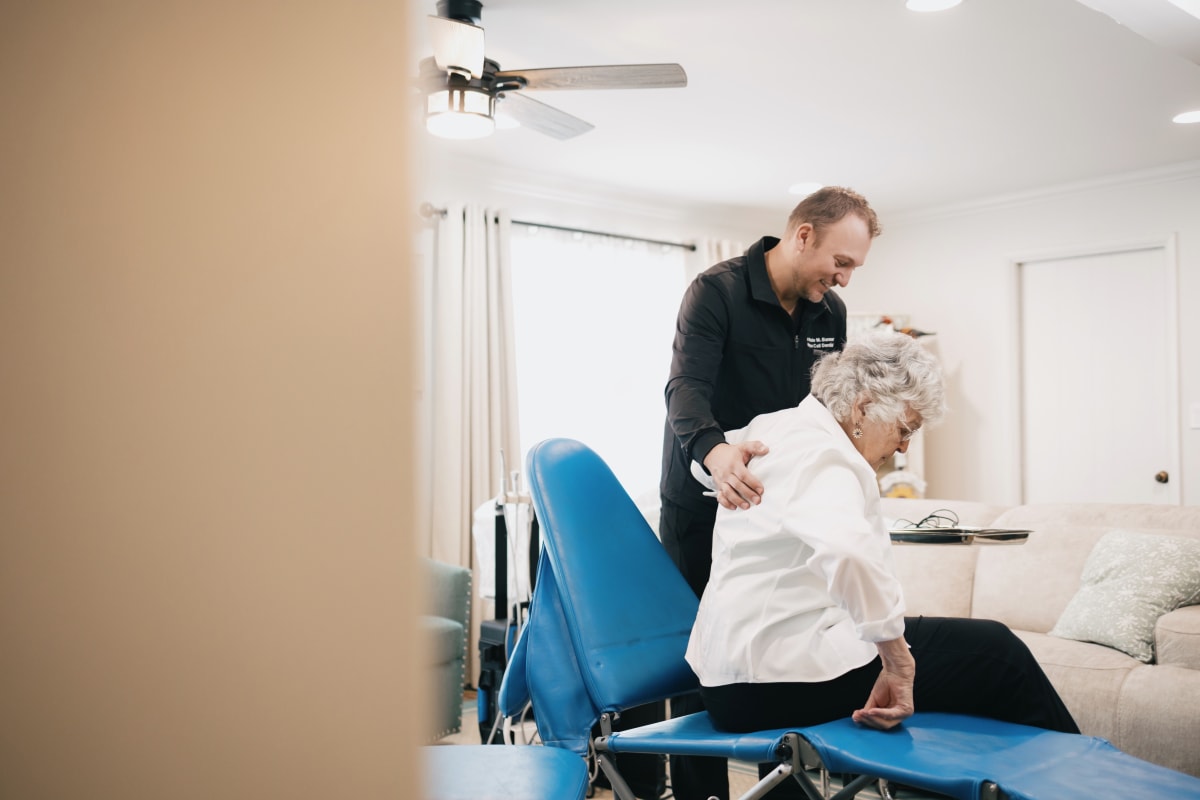
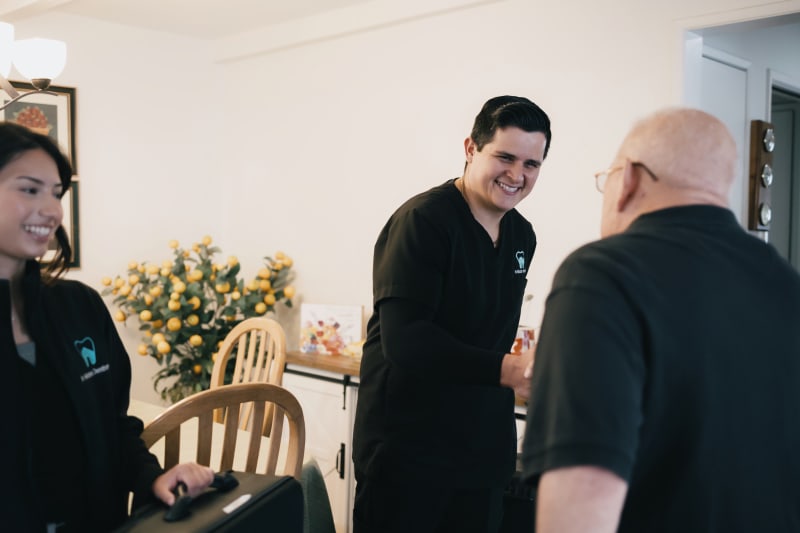
We see this pattern regularly at In Motion Dentists, and in many cases, what initially looks like an appetite problem turns out to be a dental issue that's been quietly building for a long time. The encouraging news is that care can come directly to your loved one. If getting to a dental office isn't realistic, that doesn't have to mean going without answers.
You can reach us directly at (626) 594-0374 to talk through what you're noticing and figure out the right next step together.
Sometimes the mouth doesn't send obvious signals. Instead, something just feels different. Maybe your mom starts snapping at caregivers, or your dad suddenly stops attending activities he used to enjoy.
These changes often get labeled as mood shifts or dementia progression. But the actual cause may be dental pain: an infected tooth, cracked molar, or sore spot under an ill-fitting denture.
For loved ones with cognitive impairment, behavioral changes might be the only way they can communicate pain. Watch for these warning signs:
What looks like worsening dementia symptoms can actually be someone in physical pain who has no way to tell you about it.
We know how heavy this feels. You've been watching, worrying, second-guessing yourself. Maybe you've been carrying this concern for weeks, wondering if you're seeing things that aren't there or if you're overreacting. But if you've made it this far through this article, your instincts are probably telling you something important. And here's what we want you to know: those instincts matter more than you realize.
As caregivers, you're often the only person close enough to notice when something changes. The way your mom pushes food around her plate now. How your dad flinches when he chews. The quiet refusal to wear dentures that used to fit fine. These aren't small things you should brush off. They're your loved one's way of asking for help when they can't find the words themselves.
You don't need to have all the answers before you reach out to us. You don't need a diagnosis or even certainty about what's wrong. What you need is someone who understands exactly what you're going through and can help you figure out what's possible from here.
That's what we do every single day. We come to families who are in situations just like yours. Seniors who haven't seen a dentist in years because getting there became too hard. Loved ones who are clearly uncomfortable but can't explain why. Caregivers who just need someone experienced and compassionate to take a look and help them understand the next step.
You've already done the hardest part by paying attention and caring enough to look for answers. Now let us help carry some of that weight.
Give us a call at (626) 594-0374 and simply tell us what you're seeing. Dr. Banner and our team will listen, and we'll take it from there together.
We know how heavy this feels. You've been watching, worrying, second-guessing yourself. Maybe you've been carrying this concern for weeks, wondering if you're seeing things that aren't there or if you're overreacting. But if you've made it this far through this article, your instincts are probably telling you something important. And here's what we want you to know: those instincts matter more than you realize.
As caregivers, you're often the only person close enough to notice when something changes. The way your mom pushes food around her plate now. How your dad flinches when he chews. The quiet refusal to wear dentures that used to fit fine. These aren't small things you should brush off. They're your loved one's way of asking for help when they can't find the words themselves.
You don't need to have all the answers before you reach out to us. You don't need a diagnosis or even certainty about what's wrong. What you need is someone who understands exactly what you're going through and can help you figure out what's possible from here. That's what we do every single day. We come to families who are in situations just like yours. Seniors who haven't seen a dentist in years because getting there became too hard. Loved ones who are clearly uncomfortable but can't explain why. Caregivers who just need someone experienced and compassionate to take a look and help them understand the next step.
You've already done the hardest part by paying attention and caring enough to look for answers. Now let us help carry some of that weight. Give us a call at (626) 594-0374 and simply tell us what you're seeing. Dr. Banner and our team will listen, and we'll take it from there together.
We know how heavy this feels. You've been watching, worrying, second-guessing yourself. Maybe you've been carrying this concern for weeks, wondering if you're seeing things that aren't there or if you're overreacting. But if you've made it this far through this article, your instincts are probably telling you something important. And here's what we want you to know: those instincts matter more than you realize.
As caregivers, you're often the only person close enough to notice when something changes. The way your mom pushes food around her plate now. How your dad flinches when he chews. The quiet refusal to wear dentures that used to fit fine. These aren't small things you should brush off. They're your loved one's way of asking for help when they can't find the words themselves.
You don't need to have all the answers before you reach out to us. You don't need a diagnosis or even certainty about what's wrong. What you need is someone who understands exactly what you're going through and can help you figure out what's possible from here. That's what we do every single day. We come to families who are in situations just like yours. Seniors who haven't seen a dentist in years because getting there became too hard. Loved ones who are clearly uncomfortable but can't explain why. Caregivers who just need someone experienced and compassionate to take a look and help them understand the next step.
You've already done the hardest part by paying attention and caring enough to look for answers. Now let us help carry some of that weight. Give us a call at (626) 594-0374 and simply tell us what you're seeing. Dr. Banner and our team will listen, and we'll take it from there together.
Call (626) 594-0374 or request an appointment online to set up your first visit. We’ll be in touch soon.