At-Home Dental Cleanings for Seniors: What You Can Expect
When Getting to the Dentist Isn't an Option Anymore
Maybe you've been thinking about getting your mom's teeth looked at for months now. Maybe longer. But each time you start to plan it, the challenges feel overwhelming: navigating the wheelchair, managing the transfer, dealing with her resistance to car rides, sitting through a waiting room experience she finds confusing. So the appointment gets postponed again.
It's a pattern many caregivers across Southern California recognize, and it doesn't reflect any shortcoming on your part. It simply means the traditional system wasn't designed with your loved one's needs in mind. Whether your family member is elderly, wheelchair-bound, living with dementia, or simply finds leaving home very difficult, the barriers to traditional dental care can feel insurmountable.
What many families discover only when someone shares it with them is this: a complete professional dental cleaning can happen right in your loved one's bedroom or living room. Dr. Banner and his team bring everything necessary to provide a thorough clinical visit in the comfort and dignity of home. No transportation stress. No difficult transfers. No overwhelming waiting room.
Key Points for Caregivers
- Call first to discuss your situation at (626) 594-0374. You don't need to have everything figured out before you reach out to us.
- Plan for 60-90 minutes in your loved one's familiar space, whether that's their bedroom, living room, or favorite chair.
- Ask about positioning options if your loved one uses a wheelchair, is bedridden, or can't sit in our portable dental chair.
- Expect a thorough evaluation that often reveals issues that have been quietly developing.
What We Actually Bring Into Your Home
There's a moment that catches many families off guard, and it usually happens right at the front door. Our team arrives carrying cases, bags, and equipment, and suddenly the question that was abstract on the phone becomes very real: what exactly is all of this, and what's about to happen in my living room?
It's a completely fair thing to wonder about. Many families worry whether the quality of care at home can really compare to what they would get in a dental office. What often reassures families is learning exactly what comes through the door and why it represents the same professional standards you'd expect anywhere.
Professional-Grade Equipment, Configured for Home Care
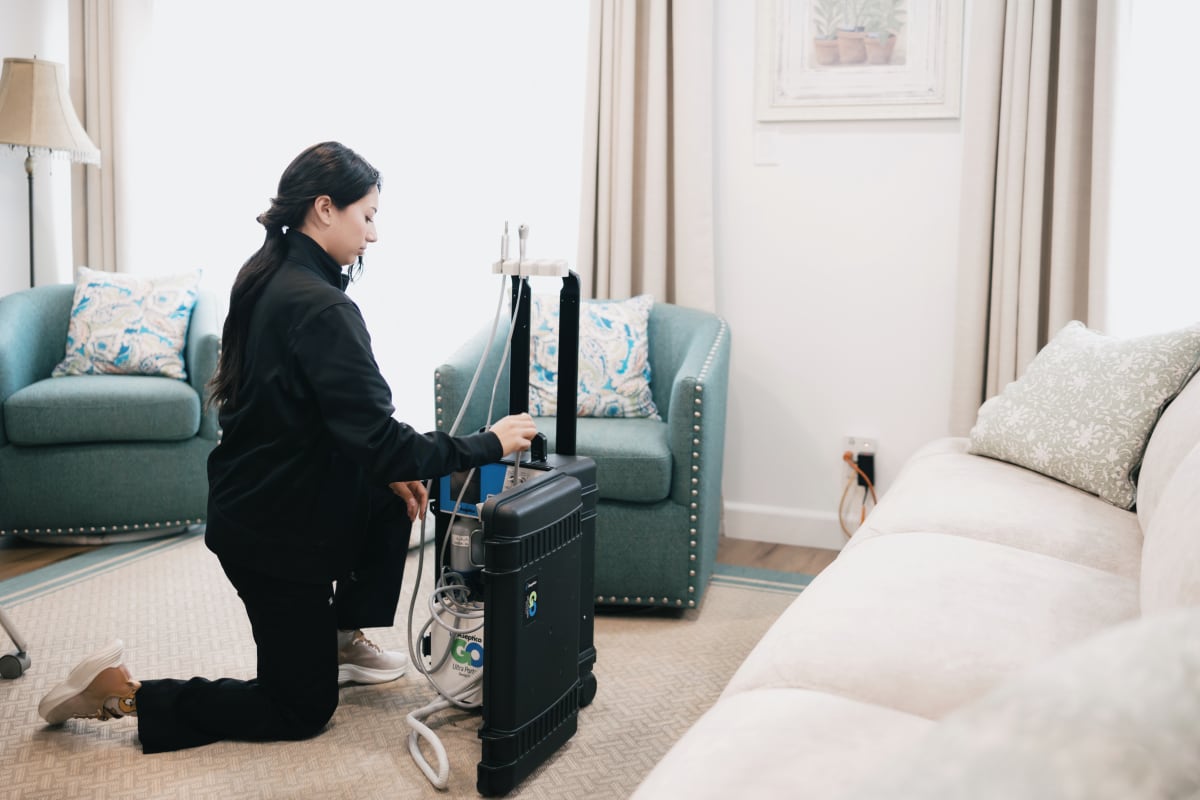
We arrive with the Aseptico Go Ultra Portable Dental System, one of the most advanced portable dental delivery systems on the market. This isn't improvised or scaled-down equipment. These are clinical-grade tools configured specifically for portability. What this means for your loved one:
- Comfortable positioning: Portable headrest support allows your loved one to be comfortably reclined in their chair, recliner, or even in bed depending on their mobility needs
- Clear visibility: Handheld LED exam light provides the same clear visibility we would have in a traditional operatory
- Professional cleaning tools: Ultrasonic scaler handles plaque and tartar buildup effectively, plus portable suction keeps the mouth clear and dry during treatment
- Complete diagnostics: Portable X-ray unit can be set up right in the room when imaging is needed to see what's happening beneath the surface
- Sterile instruments: All hand instruments come sterilized and packaged according to the same infection control standards used in traditional offices
The setting is different. The quality isn't. For many patients, especially those with dementia, anxiety, or mobility challenges, being treated in a familiar environment actually allows for better, more comfortable care than they could receive in an unfamiliar office setting.
Respectful Setup That Protects Your Space
One thing families consistently appreciate is how contained and respectful the setup feels. We protect bedding, furniture, and surrounding surfaces before getting started, and the workspace stays organized and tidy throughout the visit. The goal is to bring a real dental appointment into the home without making the space feel like it's been taken over.
If you'd like to learn more about how house call dentistry works, or see the full range of services we can provide right where your loved one is most comfortable, you can call us at (626) 594-0374 to talk it through it all in more detail.
A Walk Through the Cleaning Itself, Step by Step
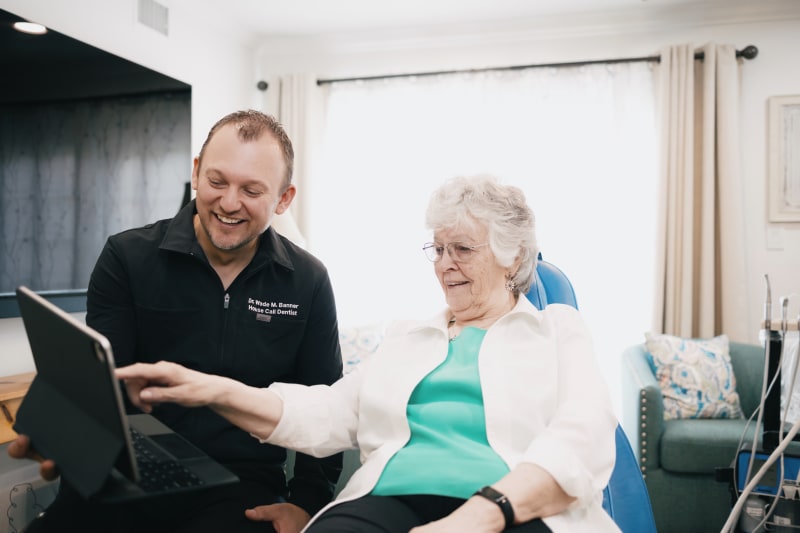
Sometimes what helps most is just knowing what the at-home appointment itself actually looks like, from the moment our team arrives to when we pack up and leave.
Starting with Your Loved One's Medical History
Every at-home cleaning starts with a thorough review of your loved one's health history and current medications. This part matters more than people often realize:
- Blood thinners affect how the gums respond during a cleaning
- Multiple medications often cause dry mouth, which changes how quickly plaque builds up
- Medical conditions help us understand how carefully we need to work around sensitive tissue
We use that information to make the home visit safer and more comfortable for your loved one specifically.
The Comprehensive Visual Exam
Before any instrument touches a tooth, we do a comprehensive visual exam right there in their familiar environment. We look at the teeth, the gums, and all the soft tissue inside the mouth. This is often where we discover issues that have been quietly developing for months or even years. We commonly find:
- Heavy plaque and tartar buildup
- Untreated cavities or root decay
- Broken or worn teeth
- Gum inflammation that's been building
- Food packing around teeth or poorly fitting dentures
- Sore areas the patient may not have been able to communicate
This gives us a clear picture of what we're working with before we begin the cleaning in their home.
The Cleaning Process
Then comes scaling, which is the process of removing tartar buildup from the teeth and along the gumline. We bring our portable ultrasonic scaler for this, and if your loved one has never experienced one before, it makes a vibrating sensation and sometimes a low humming sound. Patients occasionally find it startling the first time. That reaction is completely normal, and we always take a moment to explain what they're about to feel before we start.
For patients who haven't had a cleaning in a long time, there may be significant buildup that requires patience and gentle technique. After scaling, we move into polishing if it's appropriate for the patient. Not every senior needs or benefits from polishing the same way, so we make that call based on what we're seeing during the home visit.
If a fluoride treatment has been recommended, that comes last. It's a simple, quick step that helps protect teeth that may be more vulnerable due to dry mouth, recession, or root exposure.
Adapting for Patients with Special Needs
For patients living with dementia, significant anxiety, or those who become agitated during treatment, the home visit may not follow this sequence in a single sitting. Sometimes the most effective and compassionate approach is to break the appointment into shorter segments, pausing when the patient needs a moment, or saving certain steps for a follow-up visit.
That's not a compromise in care. It's actually good clinical judgment. You can learn more about our senior dental care services and what a teeth cleaning with In Motion Dentists looks like when we bring that care directly to your loved one's home.
What Your Loved One Will Actually Experience
Understanding the clinical process is one thing. Knowing how your loved one will actually experience it is something else entirely, and for most caregivers, that second question is the one that keeps them up at night.
Common Physical Sensations During Cleaning
We see certain patterns in how seniors experience their first cleaning in a long time:
- Gum sensitivity and bleeding: When plaque and tartar have been building up for months or years, the gum tissue becomes sensitive and sometimes bleeds easily during scaling. That can sound alarming if you're watching from across the room, but it's a normal response to inflamed tissue being cleaned for the first time in a long time.
- Dry mouth discomfort: Many seniors deal with dry mouth from multiple medications, which can make the mouth feel more sensitive during treatment. We take this into account, using extra care around fragile tissue.
- Unfamiliar sensations: The suction device can feel strange for someone who hasn't had dental care in years, or who has sensory sensitivities. We introduce it gently and explain what it does before using it.
Working With Mobility and Positioning Challenges
Not every patient can sit fully upright, and that's completely fine. We adapt to work within those limitations. The goal is always to find a position that feels safe and manageable for the patient, not to force an uncomfortable setup that doesn't fit their life.
Patients With Dementia or Cognitive Decline
For patients living with dementia or cognitive decline, agitation or confusion mid-visit is something we're very experienced with. Sometimes a patient becomes unsettled partway through, and in those moments, the right response isn't to push through. It's to slow down, offer reassurance, and let the patient set the pace. We understand that what might look like resistance or uncooperative behavior is often anxiety, confusion, or discomfort that the patient can't express in words.
Something important: the first visit doesn't always result in a complete cleaning, and that's okay. If a patient is very anxious, easily fatigued, or simply not ready to tolerate a full session, we may focus on what's most comfortable and leave the rest for a follow-up. The priority on day one is building trust and ensuring the patient feels safe and respected, not checking every box on a clinical list.
If you've been searching for answers because your loved one can't leave home, or because they shut down the moment anyone mentions dental care, you're not alone in that worry. Our senior dental care services are designed specifically for these situations, or you can explore the full range of services we provide to get a clearer picture of what's possible.
After the At-Home Cleaning: What Caregivers Should Watch For
What happens in the hours and days after our team visits your home for a professional cleaning is just as important as the appointment itself, especially for seniors who haven't had regular dental care in a while.
Normal Post-Cleaning Responses
Some mild gum tenderness or tooth sensitivity after an at-home cleaning is completely normal, especially if there was significant plaque and tartar buildup. What to expect in the first 24-48 hours:
- Mild sensitivity that settles down gradually
- Minor bleeding that stops on its own
- Gums that feel slightly tender to the touch
- A "cleaner" feeling that may seem unfamiliar at first
Soft foods, gentle brushing, and a little patience go a long way during that window. If your loved one is still reporting pain or discomfort beyond 48 hours, that's worth a phone call. You can reach us directly at (626) 594-0374 with any concerns.
Understanding Your Follow-Up Notes
We leave detailed written notes for caregivers after every home visit. These notes identify problems that have been quietly developing and create a realistic plan before those issues turn into pain or infection. Common follow-up recommendations include:
- Scheduling another home visit for treatment of a cavity that was discovered
- Addressing a loose tooth or broken restoration during our next visit
- Using a prescribed medicated rinse to support gum healing
- Adjusting daily oral care routines for better results
- Coordinating with your loved one's physician about medication-related dry mouth
Read through those notes carefully. They're based on what we actually found during our home visit, not generic recommendations. If you have questions about any of the recommendations, our mobile dental hygiene team is always available to explain what we found and why specific care steps matter for your loved one's situation.
Ready to Schedule a First Home Visit?
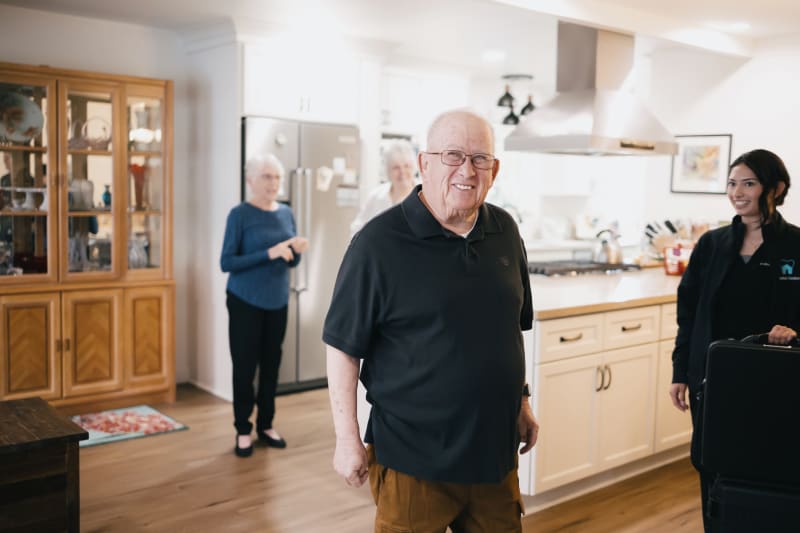
If you're still not quite sure where to start, that's completely okay. Many families across our Southern California service areas reach out to us having spent a lot of time wondering whether bringing dental care directly to their loved one was even possible.
If you'd like to learn more before scheduling a home visit, you're welcome to browse our mobile dental services or read about our senior dental care approach. If you have questions you'd rather ask a real person, please call us at (626) 594-0374.
We're available Monday through Thursday from 8:00 am to 5:00 pm, and we're happy to talk through your specific situation before we ever schedule a visit to your home.
Delivering Dentistry To You
Call (626) 594-0374 or request an appointment online to set up your first visit. We’ll be in touch soon.
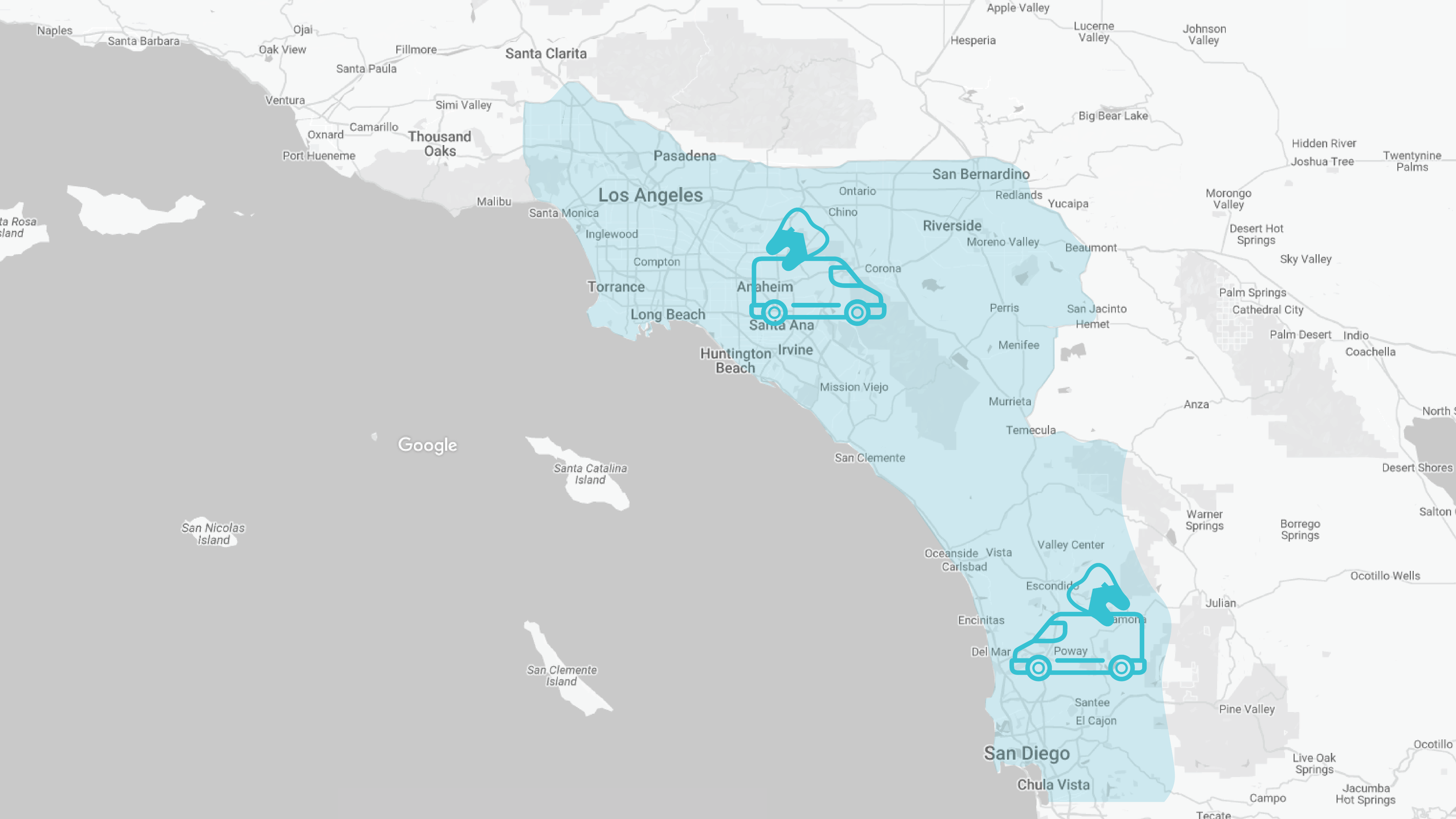
Areas We Serve
Headquarters